The Signal
In June 2025, the World Health Organization published what may become the defining public health statistic of the decade: one in six people worldwide suffers from persistent loneliness, a condition the report linked to approximately 100 deaths per hour globally — from cardiovascular disease, stroke, depression, and suicide that loneliness compounds or catalyzes. The number is staggering not because it is surprising but because it finally gives the epidemic a body count.
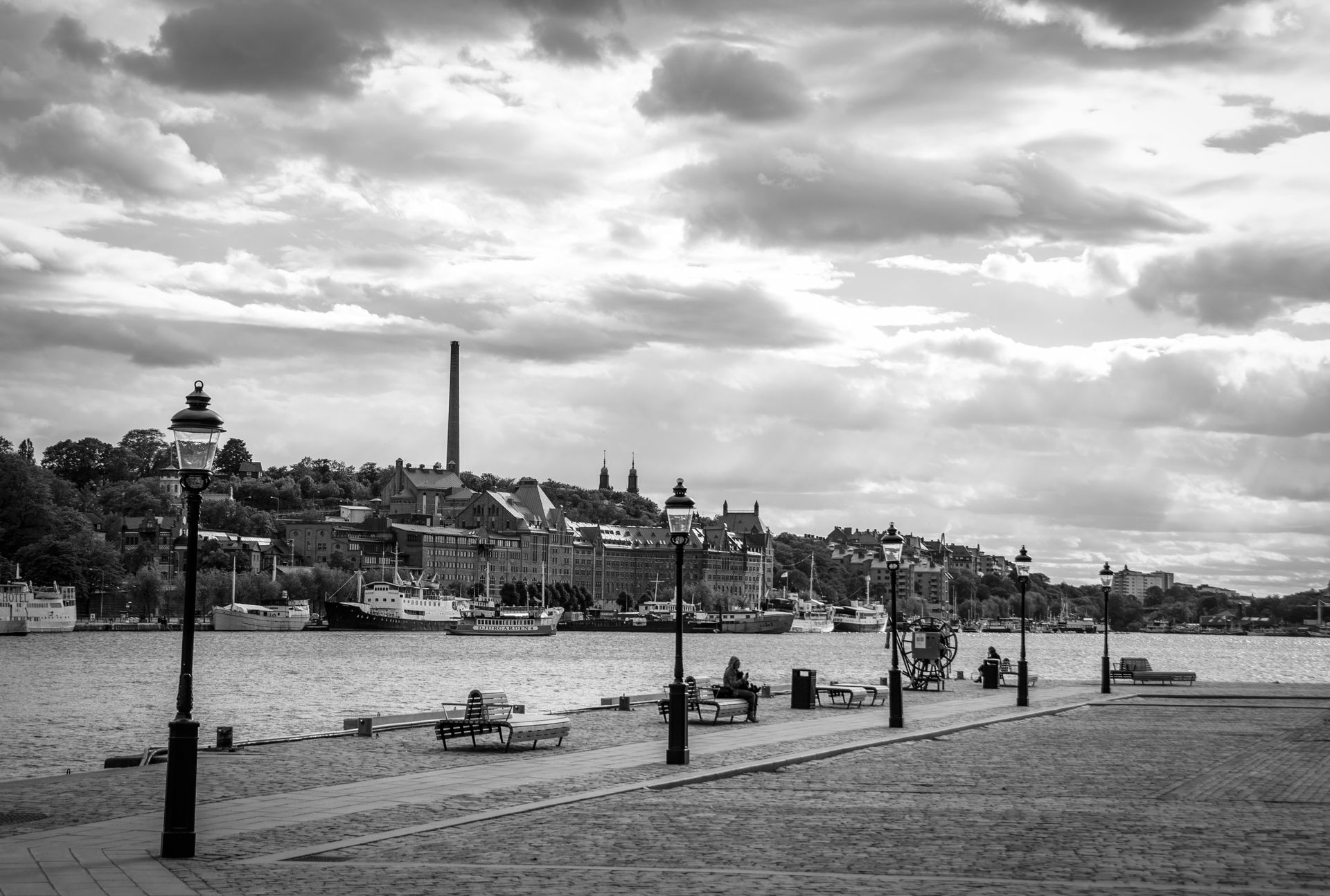
Stockholm, regularly celebrated as one of the world's most livable cities — universal healthcare, generous parental leave, pristine public transit, a waterfront that functions as public commons — also consistently appears on lists of the world's loneliest cities. This is not a contradiction. It is, researchers argue, precisely the point. The Nordic model perfected the infrastructure of individual welfare. What it did not build was the infrastructure of incidental connection.
The response emerging from Nordic research circles centers on a concept borrowed from sociology: the "third place." Coined by Ray Oldenburg in 1989, third places are environments that are neither home (first place) nor work (second place) — cafes, barbershops, libraries, public squares, community workshops. They are spaces where social contact happens without appointment, without obligation, without cost. The argument gaining traction in Stockholm, Helsinki, and Copenhagen is that third places are not amenities. They are public health infrastructure. And they need to be funded, designed, and maintained as such.
The Reading
The Nordic paradox — highest material welfare coexisting with highest reported social isolation — is not new, but the WHO data gives it a new urgency. For decades, the explanation was cultural: Nordic societies value privacy, personal space, solitude-as-autonomy. The apartment is a fortress. The social calendar is pre-structured and invitation-only. Spontaneity — the stranger at the next table, the neighbor who drops by unannounced — is not a feature of the social architecture. It is a bug.
But the more structural reading is about what happens when the state successfully removes every reason to need other people. Universal benefits mean you don't need a neighbor to watch your child, a community network to find work, a church to provide emergency support. The welfare state, in its perfection, inadvertently eliminated the friction that once forced social contact. What remains is a city of individuals who have everything except a reason to encounter one another.
Helsinki's Oodi Central Library, which opened in 2018, has become the most cited counter-model. It is not, strictly speaking, a library. It is a free public space that happens to contain books. Its three floors include workshop spaces, 3D printers, sewing machines, music studios, gaming rooms, and a cinema — all free, all open to anyone. It hosts over 10,000 events annually. Its design philosophy is explicitly anti-transactional: you do not come to consume a service. You come to be in public. The building's architects described it as "a living room for the city." In its first year, it received 3.1 million visits in a metropolitan area of 1.3 million people.
Finland's "Friends in Nature" program operates on a different register — pairing elderly participants with guided outdoor activities that combine physical health with social connection. The design insight is that shared activity lowers the social threshold. It is easier to talk to a stranger while walking through a forest than while sitting across from them in a community center. The program addresses what sociologists call the "initiation problem": most lonely people do not lack the desire for connection. They lack the context in which connection can begin without feeling forced.
The question hovering over these experiments is scale. Oodi cost 98 million euros. It is a statement building in a capital city with strong political will and a culture that values public investment. Can the third-place model work in suburbs? In mid-sized cities? In the depopulated zones that constitute most of Europe's geography? The evidence is promising but partial. What is clear is that the Nordic countries, having built the world's most complete individual welfare systems, are now confronting the social infrastructure those systems left out.
CORE Connection
Stockholm's loneliness is the logical endpoint of a design philosophy that optimized for the individual. The signal is not that the Nordic model failed — it is that it succeeded at the wrong scale. It built welfare for persons and forgot to build welfare for the spaces between them. The third-place movement, from Oodi to Friends in Nature, represents the beginning of a correction: the recognition that public space is not a luxury category in municipal budgets but a health intervention. Read alongside Madrid's neighborhood-as-intervention-unit framework, a convergent pattern emerges across European policy: the next generation of social infrastructure is spatial, not clinical. The prescription is not therapy. It is architecture.
- World Health Organization — Commission on Social Connection, Loneliness Report (June 2025): https://www.who.int/groups/commission-on-social-connection - Oodi Helsinki Central Library — Annual Report and visitor statistics: https://www.oodihelsinki.fi/en/ - Oldenburg, Ray — The Great Good Place (1989), foundational text on third places - Statistics Finland — Social isolation indicators: https://www.stat.fi/ - "Friends in Nature" program — Finnish Nature League: https://www.luontoliitto.fi/