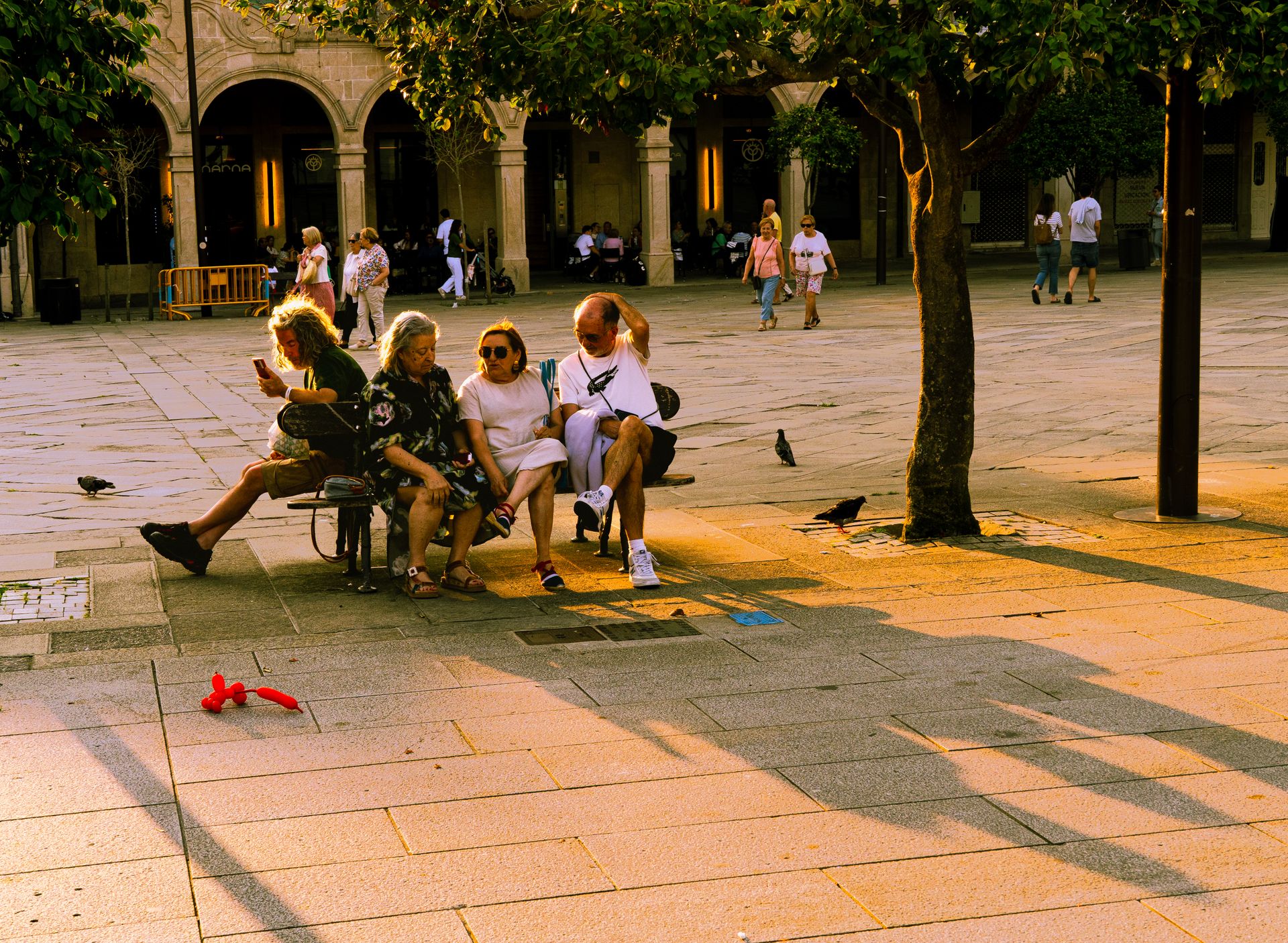
The Signal
In February 2026, the Spanish government approved the Marco Estrategico Estatal de Soledades (2026-2030) — the State Strategic Framework on Loneliness. The name alone carries a quiet radical charge: "soledades," plural. Not loneliness as a monolithic affliction, but loneliness as a spectrum of disconnections, each with its own texture, each demanding its own response. One in five Spaniards — roughly 9.5 million people — reports experiencing unwanted loneliness. The framework does not treat this as a mental health statistic. It treats it as a structural condition.
What distinguishes the Spanish approach is its unit of intervention. The United Kingdom established a Ministry of Loneliness in 2018. Japan followed with a Minister of Loneliness in 2021. The U.S. Surgeon General issued an advisory on the epidemic of loneliness in 2023. In each case, the architecture of response was individualized: helplines, awareness campaigns, clinical screening. Spain looked at the same data and arrived at a different conclusion. The problem is not located in the person. It is located in the space between persons. And the smallest governable unit of that space is the neighborhood.
The framework proposes transforming civic centers, public libraries, and cultural facilities into designated "social connection spaces." It calls for converting elderly residences into multi-service centers that integrate rather than isolate. It positions collaborative housing — cohabitation models that mix generations and income levels — as a public policy instrument, not a lifestyle experiment. Urbanism becomes the delivery mechanism for social health.
The Reading
The conceptual shift here is worth dwelling on. For nearly a decade, the global conversation about loneliness has followed a medicalized grammar. Loneliness is "linked to" heart disease, dementia, premature death. The Surgeon General's framing — "loneliness is as lethal as smoking 15 cigarettes a day" — is effective rhetoric but it carries a structural consequence: it locates the condition inside the body. The prescription, implicitly, is personal. Connect more. Join a club. Call a friend. Download an app.
Spain's framework breaks from this by treating loneliness not as a health outcome but as an infrastructure deficit. The question is not "why are people lonely?" but "what have we built that makes connection unlikely?" This is the difference between prescribing exercise and building sidewalks. Between recommending social engagement and funding the third spaces where it might actually occur.
The neighborhood-as-intervention-unit is particularly significant because it acknowledges something that public health frameworks often obscure: loneliness is unevenly distributed across geography. Dense urban cores and depopulated rural zones produce different loneliness, with different architectures. A retired widow in a vertical apartment block in Madrid's Vallecas district and a farmer in emptied Teruel province share a statistic but inhabit entirely different structural failures. The Marco Estrategico, by decentralizing its intervention to the barrio level, at least creates the possibility that responses might match the actual texture of disconnection.
There is also a political dimension worth reading. Spain's framework arrives in a moment when the European welfare state is under simultaneous pressure from demographic aging, fiscal austerity, and the still-unprocessed social damage of the pandemic. Loneliness policy, in this context, is not just social policy. It is a stress test of whether the state can still perform its most basic function: making collective life viable. The fact that Spain chose to frame this through urbanism rather than through health ministries signals an understanding that the welfare state's next frontier is not more services but better spaces.
The risk, as always with frameworks, is that the document remains aspirational. The Marco Estrategico is not legislation. It sets strategic lines but does not guarantee budgets, timelines, or enforcement. Spain has a strong recent history of progressive frameworks that lose momentum in implementation — the 2006 Dependency Law being the cautionary tale. The question is whether "soledades" will receive the sustained political attention and municipal funding that the framework's ambition requires.
CORE Connection
The signal from Madrid connects to a pattern IN-KluSo has tracked across multiple geographies: the slow, uneven recognition that social connection is infrastructure, not sentiment. When the UK created a Ministry of Loneliness, it was a naming act — important but procedural. When Japan followed, it confirmed the pattern. When the U.S. Surgeon General issued his advisory, he medicalized it. Spain is the first major Western democracy to propose that the answer is not a ministry, not a hotline, not a diagnosis — but a redesigned block. The neighborhood as the smallest unit of social policy is a genuinely novel proposition in the loneliness governance landscape. Whether it works depends entirely on whether "framework" becomes "funded mandate." But the conceptual architecture is, for now, the most sophisticated any government has produced. It deserves watching not because it will certainly succeed, but because if it does, it rewrites the grammar for everyone else.
- Ministerio de Derechos Sociales, Consumo y Agenda 2030 — Marco Estrategico Estatal de Soledades (2026-2030): https://www.mdsocialesa2030.gob.es/ - UK Government — Loneliness Strategy (2018): https://www.gov.uk/government/publications/a-connected-society-a-strategy-for-tackling-loneliness - U.S. Surgeon General — Advisory on the Epidemic of Loneliness and Isolation (2023): https://www.hhs.gov/surgeongeneral/priorities/connection/index.html - Japan Cabinet Office — Minister of Loneliness appointment (2021): https://www.cao.go.jp/ - INE — Encuesta Continua de Hogares, datos de soledad no deseada: https://www.ine.es/