The Signal
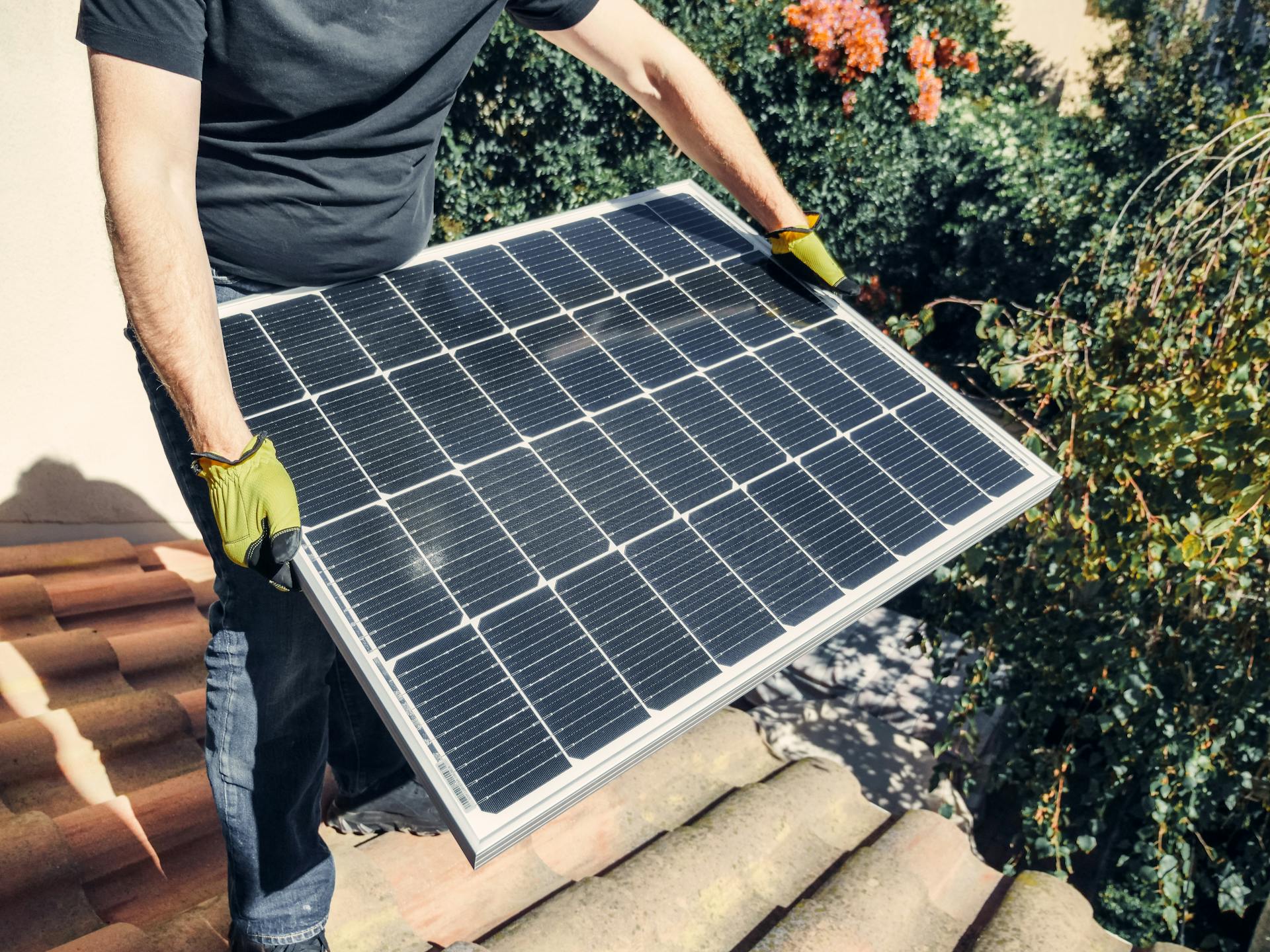
On the steep slopes of Morro da Babilônia, a hill in Rio de Janeiro’s Leme neighborhood that separates Copacabana beach from Botafogo, over 200 photovoltaic panels now catch the same Atlantic sun that tourists pay four-star rates to lie under. The Percília and Lúcio Renewable Energy Cooperative — named after two community elders — has doubled its beneficiary households from 34 to 74 families. RevoluSolar, the nonprofit behind it, has trained more than 20 young residents as certified electricians and solar installers, including Suzi Freitas and Natalia Nazario, the first women to install solar panels in a Brazilian favela.
The cooperative saves residents R$80,000 per year in electricity costs. That money stays in the community, redirected to a fund that pays the very installers, teachers, and electricians the project trained. The families who once spent over 10% of their monthly income on electricity — the formal threshold for energy poverty — now spend roughly half that.
This is not a pilot. RevoluSolar was founded in 2015 by community leader Adalberto Almeida and Belgian entrepreneur Pol Dhuyvetter. In 2021, it launched Brazil’s first favela solar cooperative. By 2026, its methodology — the Solar Cycle — has been replicated in eight communities across four Brazilian states, from the Solar Circus in Cidade Nova to Kurasi Tury in the Amazonian city of Manaus. The signal is scaling.
The Context
To understand what RevoluSolar is solving, you need to understand what electricity means in a favela. It is not an amenity. It is the line between food and spoilage, medicine and rot, safety and darkness.
A 2022 study by CLASP and Catalytic Communities found that 43.5% of households in Rio’s favelas lack a formal electricity meter. Many rely on “gatos” — clandestine hookups to the grid — not as theft but as economic necessity, the only available option for families the utility companies never bothered to formally connect. Among those who are formally connected, over 30% meet the definition of energy poverty: monthly electricity bills consuming more than 10% of household income. For Brazil’s poorest citizens, electricity can consume up to 18% of monthly income and nearly a quarter of the cost of a basic food basket.
The consequences are physical. A 2023 survey found that one in three periphery community residents in Rio experienced power outages lasting up to three days. Forty-one percent of families earning up to half the minimum wage reported blackouts exceeding 24 hours in the preceding quarter. Food spoils. Medication degrades. Children cannot study after dark. The grid is technically present; its reliability is not.
Meanwhile, Brazil as a nation is in the middle of a solar explosion. Distributed solar generation capacity grew from less than 1 GW in 2018 to 46 GW by early 2026, with over 3.7 million systems installed nationwide. Brazil added 2.3 GW of solar in just the first two months of 2026. The country’s distributed generation sector is expected to grow another 15% this year. But this boom is overwhelmingly concentrated in middle-class and commercial installations. The favela — home to roughly 16 million Brazilians, or 8.6% of the population — has been largely excluded from the solar transition happening on the other side of the hill.
The Reading
The obvious reading is environmental: solar panels reduce carbon emissions and lower electricity costs. That reading is correct but insufficient. It misses the mechanism that makes Babilônia structurally different from a rooftop installation in Ipanema.
The mechanism is sovereignty.
When Babilônia generates its own electricity, it is not simply saving money. It is building an infrastructure layer that does not depend on a utility company that has historically underserved it, a municipal government that has oscillated between neglect and gentrification projects, or a state apparatus whose most visible intervention was a Police Pacification Unit installed in 2009 — security without services. The cooperative model means residents own the panels, manage the distribution, control the fund, and decide where the savings go. The electricians who maintain the system live in the community they serve.
RevoluSolar’s methodology, the Solar Cycle, makes the architecture explicit. It is not a panel-installation program. It combines solar installations with energy efficiency education, professional vocational training, and cultural activities designed to build community governance capacity. When 69% of surveyed favela residents say they would use halved electricity bills to buy food — not pay other bills, not save, not invest, but eat — energy sovereignty is food sovereignty by another name.
The geographic symbolism matters. Babilônia was founded at the end of the 19th century by soldiers stationed on the hill, later joined by construction workers who built the tunnels and tramways connecting central Rio to Copacabana — the very infrastructure that made the luxury neighborhood below possible. The favela exists because it built the city that ignores it. Now it generates power facing the beach where tourists lie beneath the same sun, converted into kilowatt-hours on the hill above. The geography of privilege does not change, but its energy flow inverts.
The training pipeline is the second-order signal. Nine residents have been certified as electricians and installers through RevoluSolar’s Professional Training Program; in 2021 alone, the project hired 81 community members and generated R$59,000 in local income. Suzi Freitas and Natalia Nazario’s certification as the first female solar installers in a Brazilian favela is not symbolic — it is an economic fact. Each trained installer represents a portable credential, a trade that works anywhere Brazil’s 15%-per-year solar sector is growing. The cooperative does not just generate electricity. It generates electricians.
The Pattern
RevoluSolar is not alone. Across Latin America, the IEA has documented a rising wave of “bottom-up energy transitions” — community-led energy projects that address energy poverty through cooperative ownership rather than utility expansion. In South Africa, community-owned renewable energy (CORE) initiatives face regulatory barriers that prevent municipalities from purchasing community-generated electricity, revealing how institutional structures protect incumbent power even when distributed alternatives exist. In the Philippines, GCash and Coins.ph have seen a 34% increase in decentralized financial flows from diaspora communities — a parallel pattern where excluded populations build their own infrastructure when formal systems fail them.
The academic literature calls this “energy sovereignty storytelling” — the way communities in the Global South territorialize energy technologies, embedding them in local governance structures that defy the Western model of centralized generation and passive consumption. The framework is clear: decarbonization, decentralization, democratization. RevoluSolar operationalizes all three simultaneously, but the third is the one that distinguishes it from a corporate solar farm. Democratization means the community decides. It means the fund is theirs. It means the installer is their neighbor.
The replication trajectory confirms the pattern’s viability. RevoluSolar planned to expand to 100 communities by 2025. It has reached eight, with partnerships including Chinese solar manufacturer LONGi and recognition from the International Cooperative Alliance. The gap between ambition and execution is real — but the methodology travels. The Solar Cycle has been adapted from hillside favelas in Rio to indigenous communities in the Amazon. The technology is modular. The governance model is the hard part, and it is the part that works.
The Anticipation
Three scenarios emerge from this signal.
Scenario one: Cooperative scaling. If Brazil’s distributed generation regulatory framework — which has supported 3.7 million installations nationwide — explicitly incorporates cooperative models in low-income communities, RevoluSolar’s methodology could reach hundreds of favelas within five years. The 15% annual growth in distributed generation creates market conditions; policy alignment would create the channel.
Scenario two: Gentrification capture. Babilônia has already experienced gentrification pressure since UPP pacification in 2009, with hostels and tourism driving property values. Solar infrastructure could accelerate this: “green favela” becomes a branding asset, attracting investment that displaces the residents who built the cooperative. The cooperative’s community ownership structure is a partial defense, but land tenure in favelas is inherently precarious.
Scenario three: Institutional absorption. State or municipal programs adopt the Solar Cycle methodology but strip the cooperative governance layer, converting community energy sovereignty into a top-down subsidy program. The panels arrive; the democracy does not. This is the pattern the IEA warns about: community energy projects that succeed get replicated by institutions that do not replicate the community part.
Watch for: changes in Brazil’s ANEEL distributed generation regulations affecting cooperative models; LONGi or other corporate partners scaling involvement beyond ESG optics; favela resident associations in other cities requesting Solar Cycle replication; and whether the R$80,000 annual community fund in Babilônia grows proportionally as capacity doubles.
CORE Connection
This is intelligence because the headline says “solar panels in a favela” and the reality says “a community that built the infrastructure that built Copacabana now generates its own power facing the beach it cannot afford.” The reader who has ever lived in a place where the lights go out and nobody comes, where the bill takes food off the table, where the grid exists but the service does not — she is not reading about renewable energy. She is reading about what happens when people stop waiting for the city to remember them and build the city they need themselves.
Signal Confidence Index — TH-037
What would confirm this signal: Longitudinal data on Babilônia household income changes post-cooperative. Replication outcomes in at least three additional communities using the Solar Cycle methodology. ANEEL regulatory filings addressing cooperative distributed generation in low-income territories. LONGi impact reports detailing community-level metrics beyond installation counts.
What would change the SCI score: Evidence that cooperative governance has been captured by external actors or that community fund allocation decisions have shifted away from resident control. Data showing that solar savings are being offset by rising property costs driven by green gentrification. Evidence that trained installers are leaving the community for commercial-sector jobs at rates that deplete local maintenance capacity.
Verified Sources
- RioOnWatch — https://rioonwatch.org — RevoluSolar profile, Babilônia community history, energy justice and efficiency in Rio’s favelas, favela solar potential documentation
- 350.org — https://350.org — Brazil’s first favela solar energy cooperative launch and cooperative structure details
- Dialogue Earth — https://dialogue.earth — Community solar impact in Rio favelas, electricity bill savings data, cooperative operational model
- LONGi Green Energy — https://www.longi.com — LONGi-RevoluSolar ESG partnership, 26kW pilot project details, community training program metrics
- SolarQuarter — https://solarquarter.com — LONGi-RevoluSolar cooperative model analysis, expansion plans to 100 communities
- CLASP & Catalytic Communities — https://www.clasp.ngo / https://catcomm.org — Energy poverty statistics in Rio favelas (43.5% without meters, 30%+ energy poverty rate, 69% food insecurity link)
- IEA (International Energy Agency) — https://www.iea.org — RevoluSolar policy profile, bottom-up energy transitions in Latin America analysis
- International Cooperative Alliance — https://globalyouth.coop — RevoluSolar replication project documentation, cooperative model recognition
- U.S. Energy Information Administration — https://www.eia.gov — Brazil distributed solar capacity growth (1 GW to 46 GW, 2018–2026)
- PV Magazine — https://www.pv-magazine.com — Brazil 2.3 GW solar additions in first two months of 2026
- Canal Solar / ABGD — https://canalsolar.com.br — 15% distributed generation growth forecast for 2026; 8.6% population in favelas energy challenge
- Shelterforce — https://shelterforce.org — RevoluSolar organizer profiles, professional training program outcomes, R$59,000 local income generation
- European Investment Bank — https://www.eib.org — Free electricity initiatives in Brazilian favelas, social inclusion impact