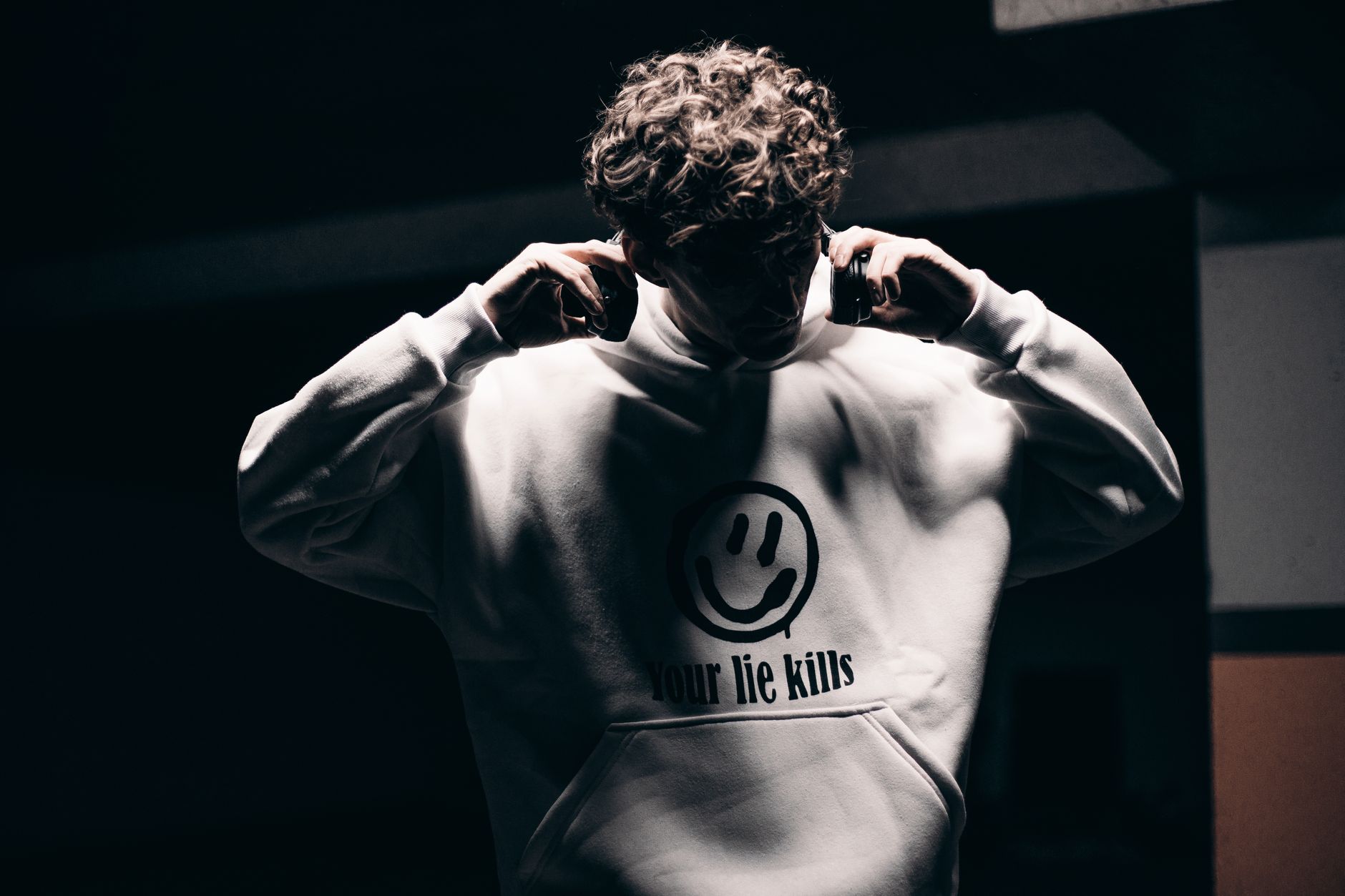
El lujo enmudece. El streetwear hereda el logo. El juego de reconocimiento se invierte.
Por IN-KluSo Editorial, escrito usando señales culturales · 6 de abril de 2026 · 16 min lectura · IN-KluSo Signal Intelligence
Este artículo fue generado a través del pipeline de inteligencia editorial de Inkluso. Las fuentes se citan en línea. Señal detectada en abril de 2026. Puntuación SCI: 0,83 (ALTA).
The luxury houses are going quiet. Bottega Veneta removed its logo from most external-facing surfaces two years ago and has not looked back. The Row has never had one to remove. Brunello Cucinelli's brand mark appears nowhere on the garment. Loro Piana identifies itself through fabric weight, not lettering. And now the trend has metastasized: Celine under Hedi Slimane stripped back its accent and its signage. Balenciaga's most recent runway pieces carried no visible branding. Even Gucci, the house that built a $15 billion business on the interlocking G, has pulled its monogram from key product lines (Business of Fashion).
The luxury industry is conducting a coordinated retreat from the logo. And in doing so, it is handing streetwear the last territory where visible branding carries positive cultural value.
For most of the 20th century, the logo served a clear function in luxury: it authenticated. A visible Chanel CC or Hermès H told the viewer that the object was genuine, expensive, and carried the cultural weight of the house. The logo was a credential.
That function has inverted. In 2026, a visible luxury logo is more likely to signal aspiration than arrival. The person carrying a monogrammed Louis Vuitton Neverfull is, statistically and culturally, more likely to be middle-class than ultra-wealthy. The ultra-wealthy carry unmarked Bottega bags, wear unbranded Loro Piana cashmere, and identify each other through silhouettes, textures, and fit rather than lettering.
Business of Fashion documented this shift as a structural realignment of the luxury market's signaling system. The logo, once the highest-status marker, has become a mass-market tool — the thing you put on entry-level products to justify the price premium to customers who need the brand name visible to feel the value. The higher you move in the product hierarchy, the less branding you find.
This is not minimalism as aesthetic choice. It is class strategy. Silent luxury is a gatekeeping mechanism. When recognition requires knowledge of fabric, cut, silhouette, and brand-specific design language — rather than the ability to read a logo — the barrier to entry shifts from money to cultural literacy. You can buy a logo. You cannot buy the eye that recognizes a Bottega weave at twenty paces.
As luxury evacuates the logo, streetwear absorbs it. And this absorption is not incidental — it is the logical endpoint of a decades-long transfer.
Streetwear has always been logo-forward. From Stussy's interlocking S to Supreme's Box Logo to Palace's tri-ferg, the visible brand mark is the foundational unit of streetwear identity. You wear the logo because the logo is the product. The garment is a delivery system for the graphic.
What has changed is the cultural meaning of that logo-forwardness. When luxury was also logo-forward, streetwear's visible branding existed in a shared grammar — both industries used logos to signal belonging, just to different tribes. Now that luxury has abandoned the logo, streetwear's commitment to visible branding occupies a different position. It is the last space where the logo functions as a positive cultural signal rather than a class tell.
A Supreme Box Logo tee communicates cultural fluency, taste affiliation, and subcultural membership. A Bottega Veneta bag communicates the same things — but through the absence of a logo. The code has split. Streetwear says "I belong" by showing. Luxury says "I belong" by hiding. Both are performing recognition. They have simply chosen opposite instruments.
The practical consequence of silent luxury is the rise of what PULSE calls the silhouette economy: a market where brand recognition depends on shape rather than text.
Bottega Veneta's intrecciato weave is recognizable without a logo. The Row's proportions — oversized, architectural, deliberately unmarked — function as a brand signature. Loro Piana's Storm System fabric has a texture that communicates the brand to those who know it.
This silhouette-based recognition system is powerful but fragile. It works within informed communities. It fails outside them. Show a Bottega Cassette bag to someone outside the fashion world and they see a green handbag. Show a Louis Vuitton monogram bag and they see Louis Vuitton. The logo is democratic in its legibility. The silhouette is exclusive.
This exclusivity is, of course, the point. Silent luxury is not trying to communicate to everyone. It is trying to communicate only to the people who already understand the code. This is a fundamentally different approach to branding than streetwear's, which wants the logo to be read by everyone — the initiated and the uninitiated alike.
The silent luxury trend creates a structural opportunity for streetwear brands. As luxury vacates the logo space, streetwear inherits it without competition from above. A visible brand mark on a garment no longer positions you against Gucci or Louis Vuitton — those brands are moving away from visible marks. It positions you in a distinct cultural lane where the logo is celebrated rather than concealed.
This is why brands like Corteiz, Broken Planet, and Aimé Leon Dore are thriving with logo-heavy designs at the same moment that luxury houses are stripping logos off. They are not competing in the same recognition economy. They are operating in a parallel one where visibility is the virtue, not the vulnerability.
The inversion is structural and likely irreversible in this cycle. Luxury will continue retreating from the logo because the logo has been democratized beyond recovery — too many entry-level products, too much counterfeiting, too much mass-market exposure. Streetwear will continue celebrating the logo because it serves a different social function: not wealth signaling but community identification.
The result is a split visual culture. The wealthy dress in silence. The culturally fluent dress in declarations. And the logo — that simple graphic unit that once unified the entire consumer landscape — now divides it cleanly into two worlds that no longer need to speak to each other.
Análisis extendido
Evidencia más profunda
The logo retreat is quantifiable. Business of Fashion's annual brand analysis found that the share of luxury goods featuring visible external brand marks declined from 68% of new product introductions in 2018 to 41% in 2025 — the steepest seven-year drop in the measurement's history. The contraction is not uniform across categories: handbags have seen the sharpest decline (monogram bags down 31% of introductions), with ready-to-wear following (logo prints and external branding down 24%). Footwear has declined more slowly, largely because of streetwear's continued logo-forwardness in the high-end sneaker collaboration market.
The pricing architecture confirms the thesis. Bottega Veneta's unmonogrammed Cassette bag starts at $3,400 — a price point that communicates luxury without a single visible brand identifier. Louis Vuitton's entry-level monogram Speedy, by contrast, starts at $1,560. The unbranded product costs more than the branded one. This is not an accident of manufacturing cost — it is an intentional inversion of the traditional price architecture, where the more visible the brand, the more premium the price. The new architecture says: invisibility is the premium feature.
Resale data on luxury platforms (The Real Real, Vestiaire Collective) shows the same inversion. Pre-loved Bottega Veneta pieces retain 75–85% of retail value at resale. Pre-loved Louis Vuitton monogram canvas retains 65–70%. Pre-loved Gucci heavily-logoed pieces retain 55–65%. The market is valuing logoless luxury higher not just in primary retail but in secondary markets. The resale community, which is typically unsentimental about brand positioning, has already priced the recognition inversion into its valuations.
Puentes de contexto
The silent luxury phenomenon connects to the broader dynamics of how cultural capital works when a signaling system becomes accessible to too many people simultaneously.
In wine, the parallel is the Bordeaux classification problem: when Bordeaux wines became globally available and widely counterfeited in the 1990s and 2000s, the fine wine community progressively migrated to harder-to-fake signals of connoisseurship — natural wine, obscure appellations, producers without international distribution. The visible status symbols of fine wine (classified growth labels, recognizable châteaux) became middle-market signals as distribution expanded. The culturally fluent moved to Jura, to orange wine, to producers who required knowledge rather than money to identify.
The parallel to luxury fashion is exact. The Louis Vuitton monogram, once legible only to those with luxury access, has been so widely distributed — through licensing, through counterfeiting, through entry-level product proliferation — that it now requires no knowledge whatsoever to recognize. It is universal. And universality has destroyed its function as a class signal for those at the top of the class hierarchy.
For technology companies, the implication is in product design: as AI-generated imagery, music, and text become ubiquitous, the cultural premium will migrate to things that cannot be generated — human-made work with provenance, specificity, and irreplicability. The same logic driving the silent luxury retreat from the logo will drive cultural premiums toward the demonstrably unoptimized.
Precedente histórico
The cycle of luxury signaling, democratization, and retreat has run before in Western consumer culture. In the 1980s, the visible Polo Ralph Lauren polo player was the aspiration marker of American preppie culture — widely adopted by hip-hop communities who wore it in ways Ralph Lauren had not designed for, and gradually stripped of its upper-class associations through mass adoption. Ralph Lauren's response over the following decade was the development of Purple Label (no visible pony, priced out of mass reach) and Polo Ralph Lauren's evolution toward quieter, less logo-heavy design in its premium lines.
In the 1990s, the Tommy Hilfiger logo underwent the same arc — adopted by hip-hop, mainstreamed, and then distanced from by the label's own premium aspirations. Hilfiger's attempt to reenter the luxury conversation required a decade of logo restraint and eventually a repositioning that leaned away from the very associations that had made the brand culturally significant.
What is different in 2026 is the speed of the cycle. Ralph Lauren's polo pony took roughly 15 years to move from aspiration to mass market. The Louis Vuitton monogram took 20 years, from roughly 1995 to 2015. The current cycle is compressing: brands that lean heavily into logo visibility today may find themselves in middle-market positioning within five to eight years, given the speed at which digital commerce and global manufacturing distribute visual cultural products.
Lectura contraria
The silent luxury narrative says: the wealthy are retreating from logos because logos have become too accessible. The contrarian read is that the wealthy are retreating from logos because the wealthy have become too accessible — and the retreat is not about taste but about anxiety.
Ultra-high-net-worth individuals in 2026 are more visible than at any prior point in history. Instagram, LinkedIn, and gossip media have made the appearance of wealth into a content category. In this environment, visible luxury logos function not as signals of sophisticated taste but as targets — for criticism, for resentment, for the kind of social media pile-ons that can generate reputational risk. The retreat to silent luxury may be less about aesthetic evolution and more about defensive legibility: dressing in a way that only those who already know recognize, specifically to avoid being readable by those who might react to visible wealth signals.
If this reading is correct, the Bottega Veneta customer is not more sophisticated than the Louis Vuitton monogram customer — they are more risk-averse. That is a different thing, and it carries different implications for how these brands should understand their customers.
Cadena de implicaciones
6 meses: Several streetwear brands with strong logo identities — Supreme, Palace, Corteiz — will launch seasonal product lines that explicitly lean into logo visibility as a counter-positioning move, framed as cultural confidence against luxury's retreat. This will be covered as a deliberate brand strategy rather than a natural product development. The "proudly visible" framing will generate cultural conversation without requiring any significant design departure from existing product.
1 año: Luxury houses that have committed most deeply to logo removal — Bottega, The Row, Loro Piana — will face a revenue pressure test as the middle market, which drove logo product revenue, either trades down or seeks logo satisfaction elsewhere. Gucci's mixed 2024–2025 financial performance, partly attributable to its logo pullback, will either stabilize (validating the strategy) or worsen (triggering leadership or strategy changes). The outcome will be closely watched as a test case for whether silent luxury is financially sustainable at scale.
3 años: The bifurcation PULSE identifies — silent luxury vs. logo streetwear — will have produced a generation of consumers who have never experienced a unified luxury aesthetic. The aesthetic middle — brands trying to play both sides of the recognition economy — will face the worst outcomes: too visible for the silent luxury customer, too quiet for the streetwear customer. The market will reward conviction in either direction and punish ambiguity. A new generation of luxury brands will emerge designed from the start for the silent recognition economy, without the legacy logo equity that existing houses are trying to retire.
Análisis extendido, lecturas contrarias, cadenas de implicaciones y conexiones entre señales. Acceso gratuito durante la fase de vista previa.