The Signal
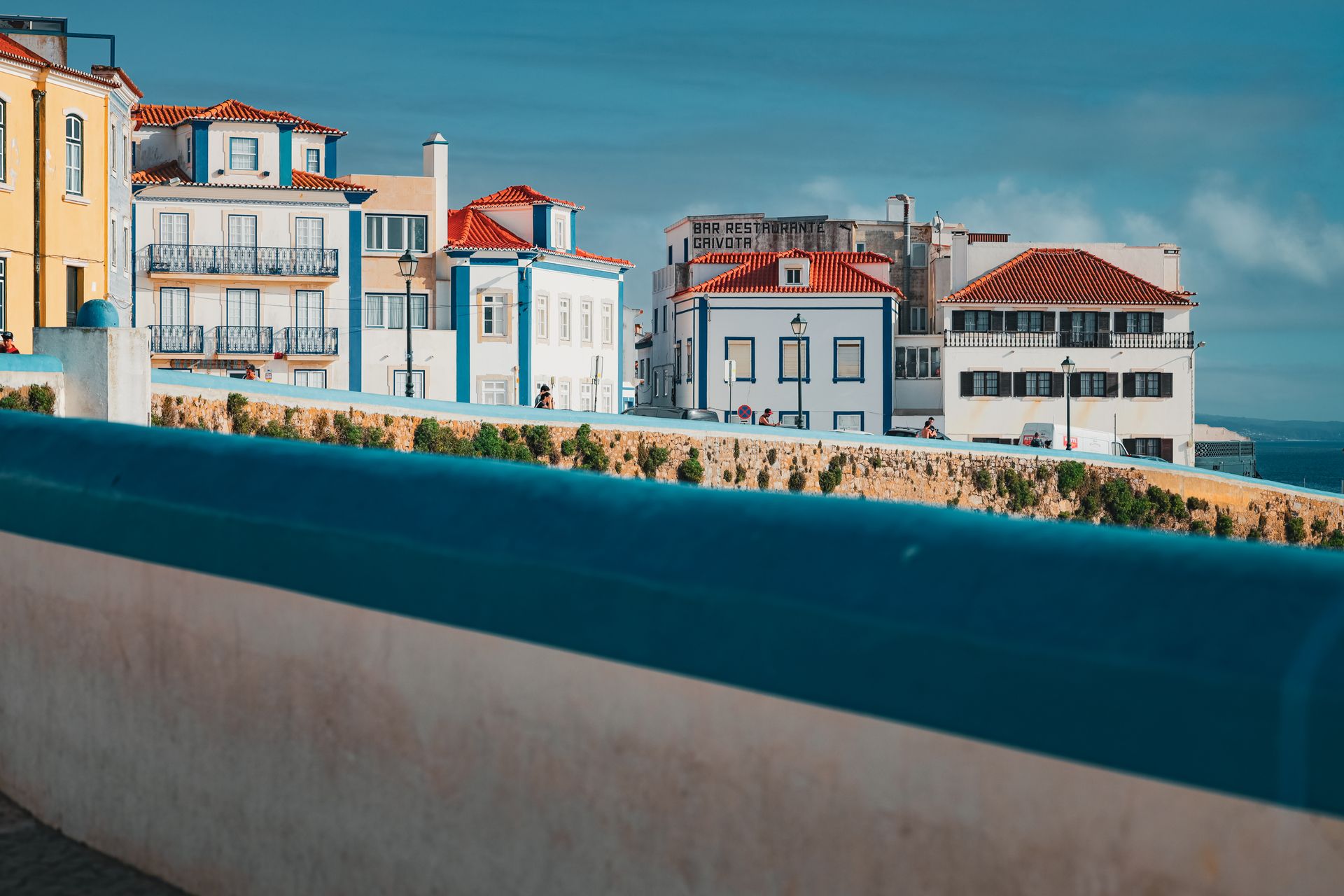
Since the pandemic, the digital nomad population in Ericeira, a small fishing-and-surfing town on Portugal's Atlantic coast an hour north of Lisbon, has roughly quadrupled. The influx follows a familiar script: remote workers from Northern Europe, the United States, and increasingly Latin America discovered a place with reliable waves, affordable rent, good Wi-Fi, and a certain photogenic informality. They came. They posted. Others followed. Rents now range from 600 to 900 euros for a single bedroom in a town where many local workers earn Portugal's minimum wage — approximately 960 euros per month. A schoolteacher named Ana, quoted across Portuguese media, compressed the structural problem into a single sentence: "They put too much money in these things, and we can't live in the city."
Simultaneously, a network of 77 Spanish municipalities has organized under the banner of communities "welcoming remote work" — small towns in depopulated Spain offering co-working spaces, subsidized housing, and community integration programs to attract digital workers to areas hemorrhaging population. The premise is that remote work can reverse rural decline. The nomad, in this framing, is not a gentrifier but a savior.
A study from the University of Melbourne punctures this narrative with a single statistic: only 2% of remote workers who relocate move from urban to rural areas. Sixty-seven percent move from one urban area to another. The digital nomad does not flee the city for the village. The digital nomad moves from an expensive city to a cheaper city — or to a small city with urban amenities and coastal charm. Ericeira. Canggu. Tulum. Chiang Mai. Medellin.
The Reading
The 2% figure deserves to sit at the center of this conversation because it dismantles the most politically convenient story about remote work. Governments from Spain to Japan to Colombia have invested in the idea that remote workers — freed from the geographic tether of the office — will redistribute economic activity across territory. They will repopulate emptied villages. They will bring tax revenue, consumer spending, and cosmopolitan energy to places that have lost all three. The University of Melbourne data suggests this is, overwhelmingly, not what happens. What happens is that remote workers cluster in places that already have what they want: reliable infrastructure, a social scene, access to airports, and the kind of aesthetic environment that performs well on Instagram. They concentrate, rather than disperse.
Ericeira is a case study in what this concentration produces. The town's population is approximately 10,000. Its housing stock was built for a fishing community and a seasonal surf tourism economy. It was not designed to absorb a permanent population of remote workers earning Northern European salaries. The result is textbook displacement: rents rise beyond what local wages can support, service workers commute from further away, the businesses that served the local community — the bakery, the hardware store, the cafe with no English menu — are replaced by co-working spaces, specialty coffee shops, and acai bowl counters. The town becomes a backdrop for a lifestyle it cannot afford to participate in.
The pattern replicates globally with eerie consistency. Canggu, Bali, once a rice-field village, now charges Jakarta prices for housing. Tulum's cenotes are surrounded by boutique hotels that displaced Mayan communities. Chiang Mai's Old City rents have tripled in a decade. Medellin's Laureles and El Poblado neighborhoods now price out the Colombian middle class. In each case, the dynamic is identical: Global North incomes enter a Global South or peripheral economy, inflating housing costs to a level that is still cheap by the nomad's standard and unaffordable by the local's. The nomad experiences the place as affordable. The local experiences it as lost.
The Spanish network of 77 municipalities represents the policy optimism that the Melbourne data complicates. These are towns in Castilla-La Mancha, Aragon, Extremadura — places where the population has been declining for decades, where schools close for lack of children, where the average age climbs toward 60. The offer is genuine: come, work, contribute, stay. But the 2% statistic suggests that the digital workers these municipalities need are not, in practice, the digital workers who relocate. The ones who relocate go to Ericeira. They go to Lisbon. They go to Valencia. They go to places that are already somewhere.
There is also a temporal dimension the "welcoming remote work" model does not fully account for. Digital nomads are, by definition and by self-identification, nomadic. Average stays range from three to six months. They are not immigrants. They are not settlers. They are a transient economic presence that raises rents during their stay and leaves a restructured housing market when they go. The municipality that attracts them does not gain a permanent resident. It gains a seasonal population that distorts the local economy without integrating into it. The cafe gets espresso. The school does not get students.
CORE Connection
The Ericeira signal connects to a global pattern that IN-KluSo has tracked from Bali to Colombia to Southern Europe: digital nomadism as an unregulated export of purchasing power. The nomad is not a villain. They are responding rationally to a global labor market that has decoupled income from geography. But the communities that receive them — Ericeira, Canggu, Tulum, Chiang Mai — bear the costs of that decoupling without having consented to it. The 2% statistic from the University of Melbourne is the number that should reframe the policy conversation: remote work does not redistribute. It reconcentrates. And it reconcentrates in places that are charming, connected, and coastal — precisely the places least in need of economic rescue and most vulnerable to the inflation that rescue brings. The nomad, as Ana the schoolteacher understood, destroys what they came to find. Not out of malice but out of arithmetic.
- University of Melbourne — Remote work relocation study: https://www.unimelb.edu.au/ - INE Portugal — Ericeira demographic and housing data: https://www.ine.pt/ - Red de Municipios de Acogida del Teletrabajo (Spain) — Network of 77 municipalities: https://www.pueblosremotos.com/ - OECD — Housing affordability and remote work displacement (2024): https://www.oecd.org/housing/ - Portuguese media — Teacher Ana quotes: Publico, Observador - Nomad List — Ericeira cost-of-living data: https://nomadlist.com/ericeira