The Signal
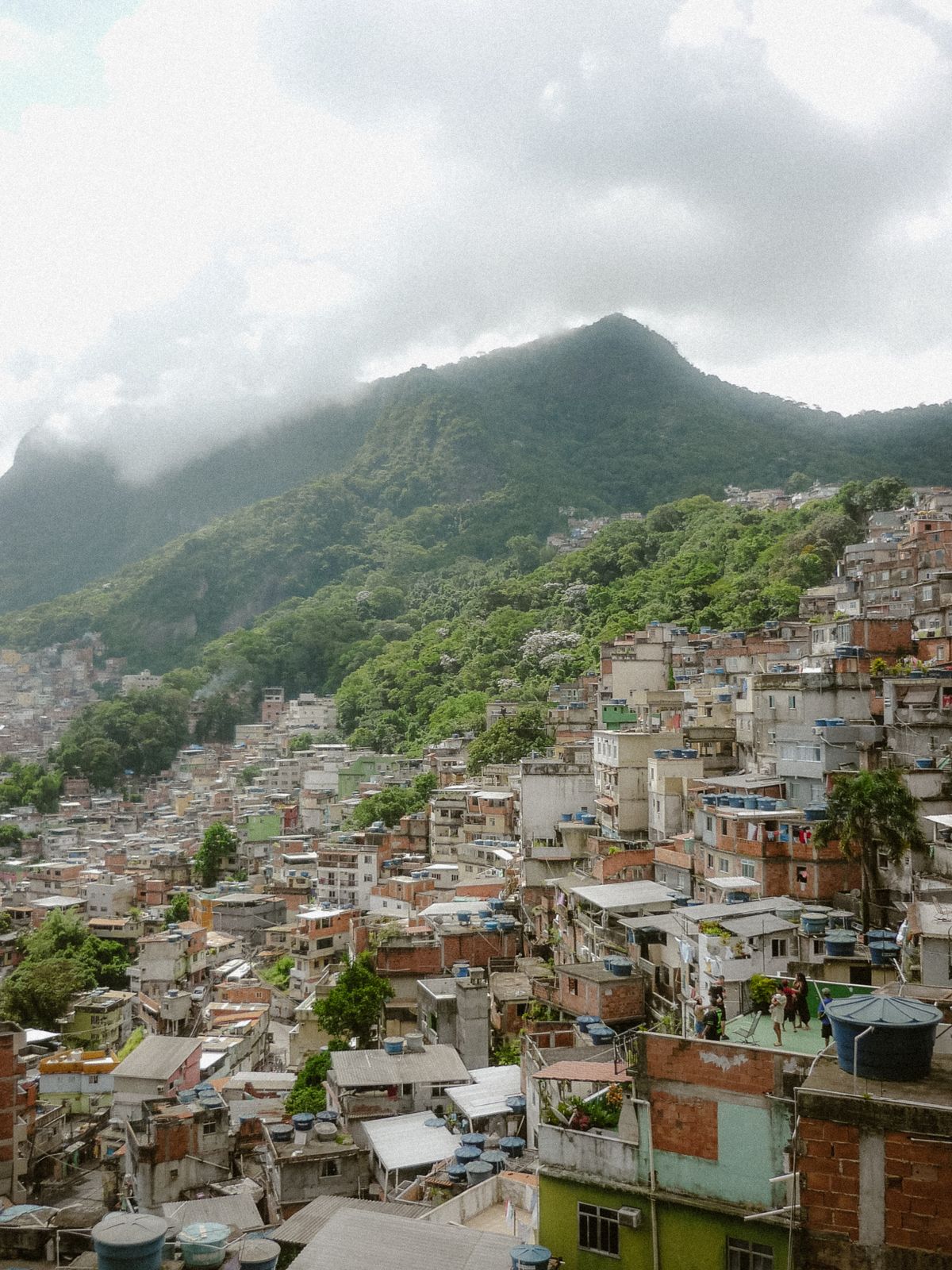
Walk the upper reaches of Cerro Mariposa in Valparaíso and you will see it in the lot lines. What was one dwelling five years ago is now three. The corrugated zinc boundary that once marked a single family's footprint has been partitioned with plywood walls, each section housing a separate household. The footprint hasn't changed. The density has tripled.
A study published in Frontiers in Human Dynamics has documented what residents of Chile's hillside campamentos have known for years: informal settlements in the Valparaíso region are no longer expanding primarily by spreading across new terrain. They are densifying internally. Between 2011 and 2024, the number of families living in informal settlements nationwide grew from 27,378 to 88,174 — a 222% increase — distributed across 1,187 documented camps. But the total land area occupied by these settlements grew by a far smaller proportion. The arithmetic means one thing: more people per square meter of already precarious ground.
The researchers mapped the morphology of this densification and found a pattern they describe as "self-organized subdivision." Families who arrived first and established plots are partitioning those plots — selling, renting, or lending space to newer arrivals. The process mirrors formal real estate subdivision in its spatial logic but operates entirely outside regulatory frameworks. There are no building codes governing the structural additions, no drainage engineering for the increased load on hillside soils, and no fire separation between units that now share walls made of combustible materials.
The Context
Valparaíso is the worst possible city for this pattern because of what sits beneath the settlements: steep ravines, fire-prone eucalyptus vegetation, and soil conditions that become unstable under increased load and water saturation. The catastrophic 2014 wildfire that killed 15 people and destroyed over 2,900 homes in Valparaíso's upper hills burned through terrain where campamentos had been densifying for the previous decade. The 2024 fires in the Viña del Mar-Valparaíso conurbation — which killed at least 137 people — tore through the same geography, now holding substantially more people per hectare.
The Frontiers study frames the densification as a demand signal, not a cultural preference. Chile's housing deficit reached an estimated 650,000 units in 2024, according to the Ministry of Housing and Urbanism (MINVU). The formal housing market in Valparaíso produces fewer than 3,000 new units per year. The gap between demand and supply is not closing — it is accelerating. Informal settlement densification is the market's answer to the state's inaction: if the city won't build affordable housing, the residents will subdivide what they already have.
The Lincoln Institute of Land Policy's 2025 analysis of Latin American informal markets noted that Chile — despite being the region's wealthiest country by per-capita GDP — has one of the fastest-growing informal settlement populations, driven by a combination of migration (primarily from Venezuela, Haiti, and Colombia), stagnant public housing production, and urban land prices that have outpaced wage growth by a factor of three since 2015.
The Analysis
Valparaíso's inward densification is not a local anomaly. It is the dominant mode of informal growth in cities where outward expansion has hit geographic, regulatory, or cost barriers.
Bogotá's southern periphery — Ciudad Bolívar, Bosa, Usme — shows the same trajectory. A 2024 Universidad de los Andes study documented that informal settlement density in Ciudad Bolívar increased by 40% between 2018 and 2023, while the settlement footprint expanded by only 12%. Families are building upward and inward: adding second and third stories to structures originally designed as single-floor, subdividing interior spaces, and converting patios and setbacks into habitable rooms. The structural risk is severe — Ciudad Bolívar sits on clay soils prone to landslide, and the additional load of unengineered vertical construction has been linked to at least 14 structural collapses since 2020.
Lima's Villa El Salvador, once celebrated as a model of organized informal settlement, has undergone the same transformation. What began in 1971 as a planned grid of standardized lots has densified to the point where original single-family lots now house three to four families, with interior courtyards converted to rooms and upper floors added without foundations adequate to support them. Peru's National Statistics Institute (INEI) recorded that Lima's informal housing stock increased by 23% between 2017 and 2023, while the city's informal settlement footprint grew by only 6%.
Istanbul's gecekondus — the Turkish term for informal settlements, literally "landed at night" — underwent rapid internal densification in the decade before the 2023 earthquake. A study by Istanbul Technical University found that informal neighborhoods in the Esenyurt and Bağcılar districts had floor-area ratios exceeding those of formally planned districts, achieved entirely through unregulated vertical and interior subdivision. The earthquake devastated these neighborhoods disproportionately.
Nairobi's Kibera follows the pattern at extreme scale. With an estimated population between 250,000 and 500,000 on roughly 2.5 square kilometers, Kibera has one of the highest non-high-rise population densities on Earth. A 2024 UN-Habitat study found that 60% of Kibera's structures had been subdivided at least once in the previous decade, with average unit sizes shrinking from 12 square meters to under 8. The settlement has not expanded laterally in 20 years. It has compressed.
The Anticipation
The 222% growth in Chile's campamento population is not a crisis that will resolve through conventional housing policy timelines. At current production rates, Chile would need over two decades to close the formal housing gap — and the gap is widening faster than production can accelerate. The inward densification of existing settlements will continue, and with it, the accumulation of structural, fire, and landslide risk on terrain that was already marginal.
The direction this points toward is a forced reclassification of what "informal settlement" means for urban planning. The old model — settlements as peripheral expansion — could theoretically be addressed through servicing and formalization programs that brought infrastructure to the edge. The new model — settlements as interior compression — requires intervention inside existing built fabric, which is architecturally, legally, and politically far more difficult. The cities that recognize this shift early will invest in retrofitting and structural reinforcement programs inside settlements. The cities that don't will keep counting casualties after fires and landslides, wondering why their urban-edge policies didn't prevent a disaster that happened inside.
CORE Connection
This signal is about the shape of housing failure. When a city's formal market cannot produce affordable units at scale, the informal market doesn't wait — it subdivides. The reader who watches housing policy debates in any growing city is looking at the input. Valparaíso's hillside partitions are the output.
Verified Sources
- Frontiers in Human Dynamics — https://www.frontiersin.org/journals/human-dynamics — Informal settlement densification study, family count data (27,378→88,174), self-organized subdivision morphology
- The Perspective (Chile) — https://www.theperspective.com — Campamento growth context and housing deficit reporting
- Lincoln Institute of Land Policy — https://www.lincolninst.edu — Latin American informal market analysis, Chile housing price-to-wage divergence
- MINVU (Chile Ministry of Housing) — https://www.minvu.gob.cl — 650,000-unit housing deficit estimate
- UN-Habitat — https://unhabitat.org — Kibera subdivision data, unit-size reduction documentation