The Signal
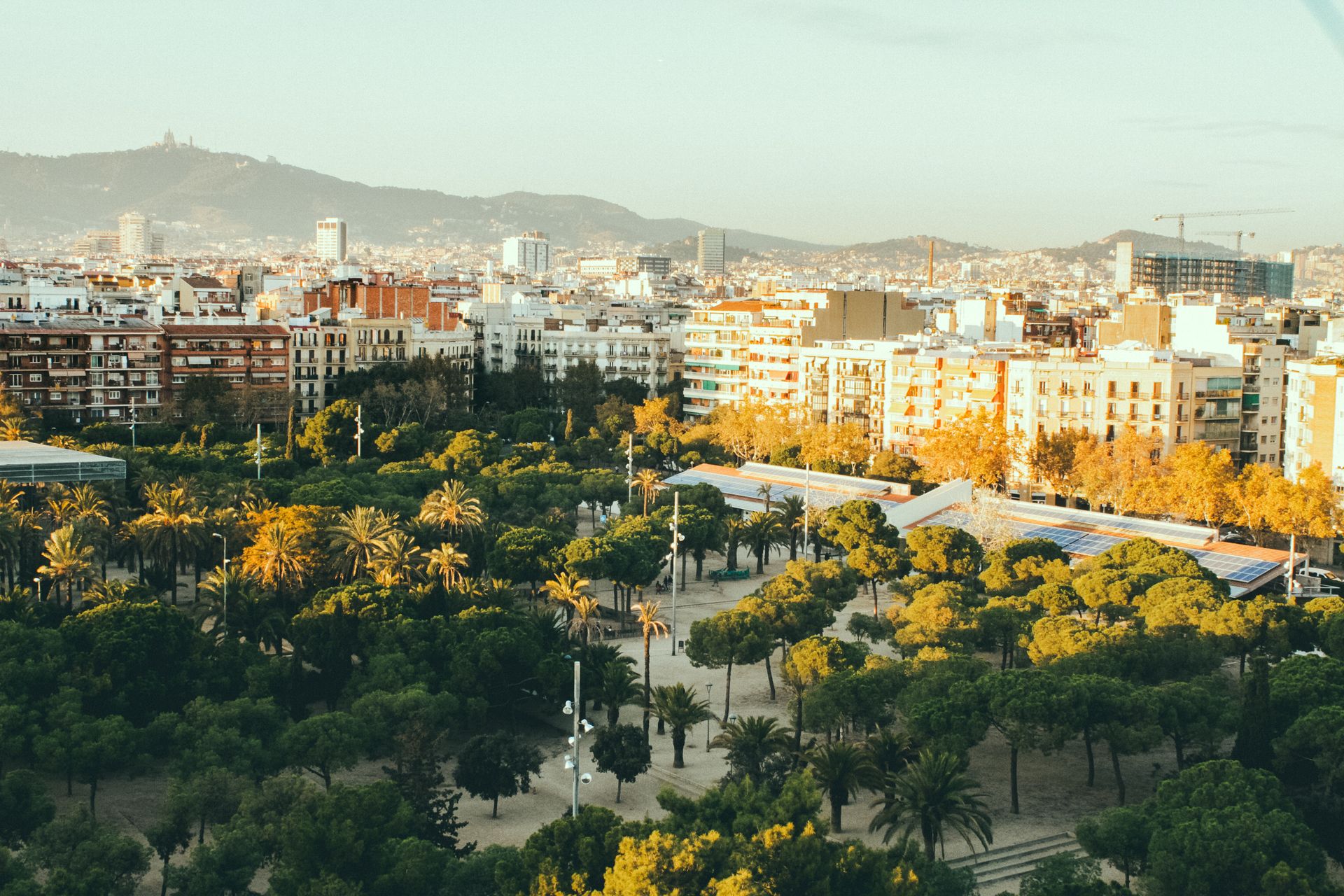
Poblenou was, for most of the 20th century, the Manchester of Catalonia — a dense industrial district of textile factories, metal workshops, and working-class blocks along the northeastern waterfront of Barcelona. Its chimneys defined the skyline. Its residents defined the labor movement. Then came 22@.
Launched in 2000, the 22@ innovation district was Barcelona’s bid to rewrite 200 hectares of industrial zoning as a knowledge-economy hub. Technology firms, design studios, university campuses, and media companies were invited in through tax incentives and planning permissions. Twenty-five years later, the numbers tell their own story: property prices have risen more than €3,000 per square meter in a single decade. Near the new parks and public spaces — specifically around the Superilles (superblocks) that have reshaped street grids to prioritize pedestrians — the demographic shift is sharp. University-educated residents increased 28% in five years. Average household incomes rose 25% in the same period. The neighborhood improved. It also became someone else’s neighborhood.
Barcelona as a whole offers the macroeconomic frame: 74% of the average salary now goes to rent. This is not a housing crisis in the conventional sense. It is a structural condition in which the city functions normally — tourism thrives, GDP grows, international rankings celebrate “livability” — while most of its inhabitants are being financially suffocated.
The Reading
The green-price paradox is not theoretical. It has been measured, repeatedly, in cities that implemented precisely the kind of infrastructure Poblenou now showcases. New York’s High Line is the canonical case. An abandoned elevated railway on Manhattan’s west side was converted into a public park starting in 2009. It became one of the most visited attractions in the city. Property values within a quarter mile rose 103% between 2003 and 2011. The neighborhood that surrounded it — once meatpacking warehouses, small galleries, queer nightlife — was replaced by luxury residential towers. The High Line is beautiful. It is also the most expensive park bench in the Western Hemisphere.
Chicago’s 606 Trail — a similar rails-to-trail conversion on the city’s northwest side — produced comparable effects. Home prices near the trail increased 48% faster than citywide averages. Latino families who had lived in Humboldt Park and Logan Square for generations were displaced by an amenity ostensibly built for them. In Atlanta, the BeltLine project — a 22-mile loop of parks, trails, and transit on former railway corridors — was explicitly designed with equity goals. A tax allocation district was created to fund affordable housing. A decade in, the affordable housing targets remain largely unmet, and property values along the corridor have surged. The intention was inclusive. The outcome was not.
Medellín’s Vía Verde adds a dimension from the Global South. Green corridors planted along highways and waterways were part of the city’s post-violence urbanism — a deliberate effort to use public space as social repair. The greening worked. Air quality improved. Property values rose. And the informal communities closest to the new green spaces faced intensified pressure from formal market dynamics.
The pattern is not that green infrastructure is bad. The pattern is that green infrastructure, without binding affordability mechanisms, functions as a subsidy to property owners and a penalty to renters. Every tree planted in a low-income neighborhood increases its value. Value, in a market without price controls, becomes price. Price becomes displacement. This is not an unintended consequence. It is the default setting.
Barcelona’s Superilles make this paradox especially vivid because the design is genuinely excellent. Reclaiming street space from cars, creating micro-parks, reducing noise and pollution — these are not cosmetic improvements. They address real quality-of-life deficits. But in a city where three-quarters of income goes to rent, making a neighborhood more liveable makes it more expensive, and making it more expensive makes it less liveable for the people who were already there. The Superilla does not cause gentrification. It accelerates a process in which gentrification was always the unregulated outcome.
CORE Connection
What Poblenou reveals is that the progressive urbanist toolkit — pedestrianization, green space, mixed-use zoning, public transit — is incomplete without a housing policy that anchors residents in place. Without rent controls, community land trusts, or social housing mandates tied to infrastructure investment, every improvement becomes a luxury amenity marketed to a wealthier demographic. The city becomes a product. Its residents become the packaging — necessary for the brand, disposable when margins tighten.
IN-KluSo tracks this signal not to argue against parks or bike lanes but to name the mechanism that turns public goods into private premiums. The question is never whether to make neighborhoods better. The question is whether the people who live there now will still be able to live there after.
Sources
22@ Barcelona: Ajuntament de Barcelona, 22@ district documentation · Poblenou property price data: Idealista, Barcelona municipal housing observatory · Superilles demographic data: Barcelona Urban Ecology Agency reports; Nació Digital analysis · Barcelona rent-to-income ratio: Sindicat de Llogateres, municipal housing reports (2025) · High Line property value impact: NYU Furman Center studies (2003-2011) · 606 Trail displacement: DePaul University Institute for Housing Studies · BeltLine equity analysis: Georgia Tech research; Atlanta BeltLine Inc. annual reports · Medellín Vía Verde: Empresa de Desarrollo Urbano (EDU) documentation