Every day in Thailand, some twenty-five thousand NETA cars go out as if nothing were wrong: they charge overnight, start in silence, run their usual routes. Every day, for years, the routine included a printed promise: a factory warranty and a network of showrooms — sixty-six in March 2025 — where someone answered for whatever part might fail.
One day the network began to shrink. Sixty-six showrooms fell to fifty-three in two months. Then to around forty. A single distributor closed eight of its eleven sales floors and workshops, and said the reason out loud as it did: it no longer trusted the brand's management. In China, the parent company had gone bankrupt.
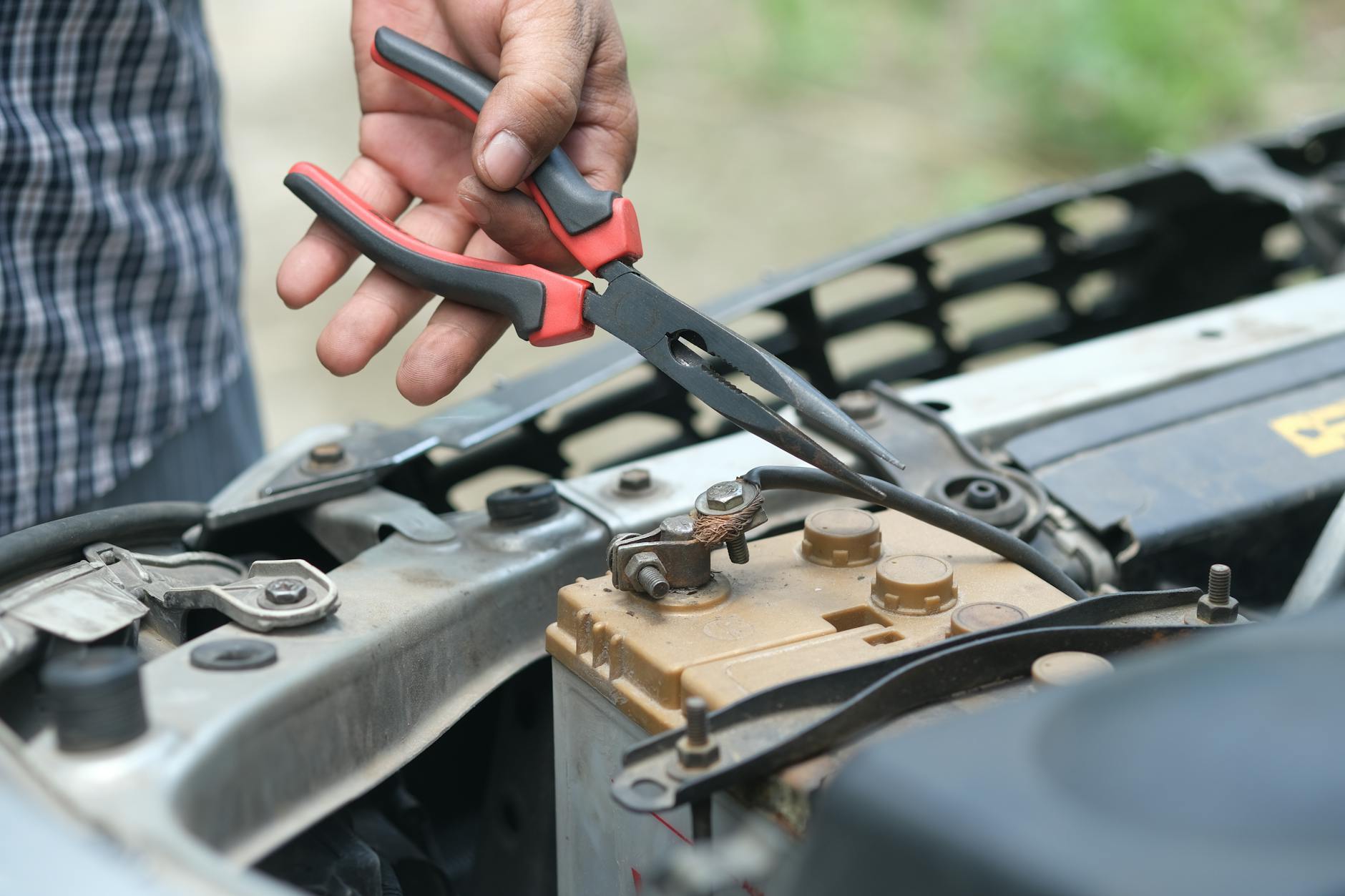
So the owner who took his car to the authorized service center found shutters down, or waits that stretched to ten months for a single repair. So, with the official workshop gone and parts that never arrive, he did what no owner's manual contemplates: he opened the hood and began repairing his own car — knowing that doing so, or taking it to an independent shop, could void the warranty he still holds on paper. The warranty exists. The counterpart does not.
So the complaints became an avalanche: one thousand three hundred and forty-eight between 2024 and 2026, split between the consumers' council and the state protection office, nearly half of them for vehicle defects. And so, on June 24, 2026, something happened that almost never happens in any parliament: the first reading of a warranty law — the Lemon Law — passed four hundred and twenty votes to zero. Not one against. When the owner becomes his own mechanic, even politics agrees.
Until that law completes its journey — second and third reading, Senate, Royal Gazette — twenty-five thousand cars will keep depending on some forty showrooms and on their owners' patience.
What follows is not the chronicle of a brand that went under. It is something else: what a citizen does when a warranty becomes paper without a counterpart — and how that citizen pushed a State to legislate.
Scene reconstructed from documented conduct and territory; sources at the end of the article.
The Signal
There are around 25,000 NETA vehicles on Thai roads and roughly 40 showrooms left to serve them. There were 66 in March 2025 and 53 in May. One distributor alone closed eight of its eleven sales and service sites, and said why out loud: it did not trust NETA's management.
What began happening in the yards is not that people complain. It is that people repair.
Facing closed service centres and parts that do not arrive, owners are fixing their own cars — knowing that taking the vehicle to an independent workshop can void the warranty they still hold on paper. Some authorized repairs took up to ten months. The warranty exists; the counterparty does not.
The Context
The Thailand Consumers Council received a surge of complaints against NETA: parts unavailable, service centres shuttered, consumers repairing on their own. Added to those filed with the Office of the Consumer Protection Board, the state consumer-protection body, they come to 1,348 complaints between 2024 and 2026 — 556 at the OCPB and 792 at the council — of which 72.3% have been resolved. The breakdown matters more than the total: 47.3% for vehicle defects, 18.2% for deposits not returned, 14.7% for discounts applied after purchase.
The OCPB, with Ronnarong Phoolpipat as secretary-general under minister Supamas Isarabhakdi, began inspections in Bangkok and nearby provinces before extending them nationwide, and put specific attention on one point: how battery performance is disclosed and what the battery warranty actually says.
The market's shape explains the scale. Chinese brands hold between 70% and 80% of Thailand's electric market. BYD is around 40% and was scrutinized over discounts of up to 340,000 baht per vehicle, which leave the earlier buyer with a car devalued overnight. NETA was separately scrutinized for unmet local-production commitments, and its parent in China entered bankruptcy.
And Parliament answered: the bill known as the Lemon Law passed first reading on June 24, 2026, by 420 votes to none. It still needs second and third readings, the Senate and publication in the Royal Gazette.
The Reading
The company is not silent, and that has to be said: NETA states it is converting debt into shares, seeking partners and investment, and announced a new distribution centre to improve parts supply. It may succeed. The signal does not depend on the company failing.
The simple hypothesis would be that a firm failed and its customers got burned, as with any appliance. That does not hold. An appliance does not require registration, or insurance, or an eight-year warranty on the part worth half the product. What collapses here is not the object: it is the promised duration. And promised duration is not a property of the car — it is a contract with a company.
So the finding is not in the bankruptcy — that is business reporting — but in what people do. When a warranty loses its counterparty, the owner does two things at once: he becomes his own workshop, and he pushes the state to legislate. The 792 complaints before a consumer council and a law passed 420 to nothing are the same behavior seen through two windows.
The reverse bias is worth naming too: here the hard sources are a consumer council and a state agency — the industry's counterweights. Local automotive analytics and the press replicating the bankruptcy serve as context, not as thesis.
The Pattern
Thailand is becoming the first regulatory laboratory of electric orphanhood, and what is tested there will be copied.
Three things are foreseeable between 2026 and 2030. If the Lemon Law completes its passage, forcing buy-back or replacement of a defective vehicle changes the entry calculation for any new brand in Southeast Asia: arriving cheap stops being free. Second, subsidies tied to local-production commitments become enforceable with teeth, and the brand that promised a plant and did not build it pays. Third, and this is the most interesting turn: the independent workshop stops being the enemy of the warranty and becomes the only real service network — which forces someone to certify it.
It is the same gap left open in Mexico City, seen from the other end. There the paperwork traps the owner. Here the owner pushes the state.
Each link supports a numeric claim in this piece. Open to check.