The Signal
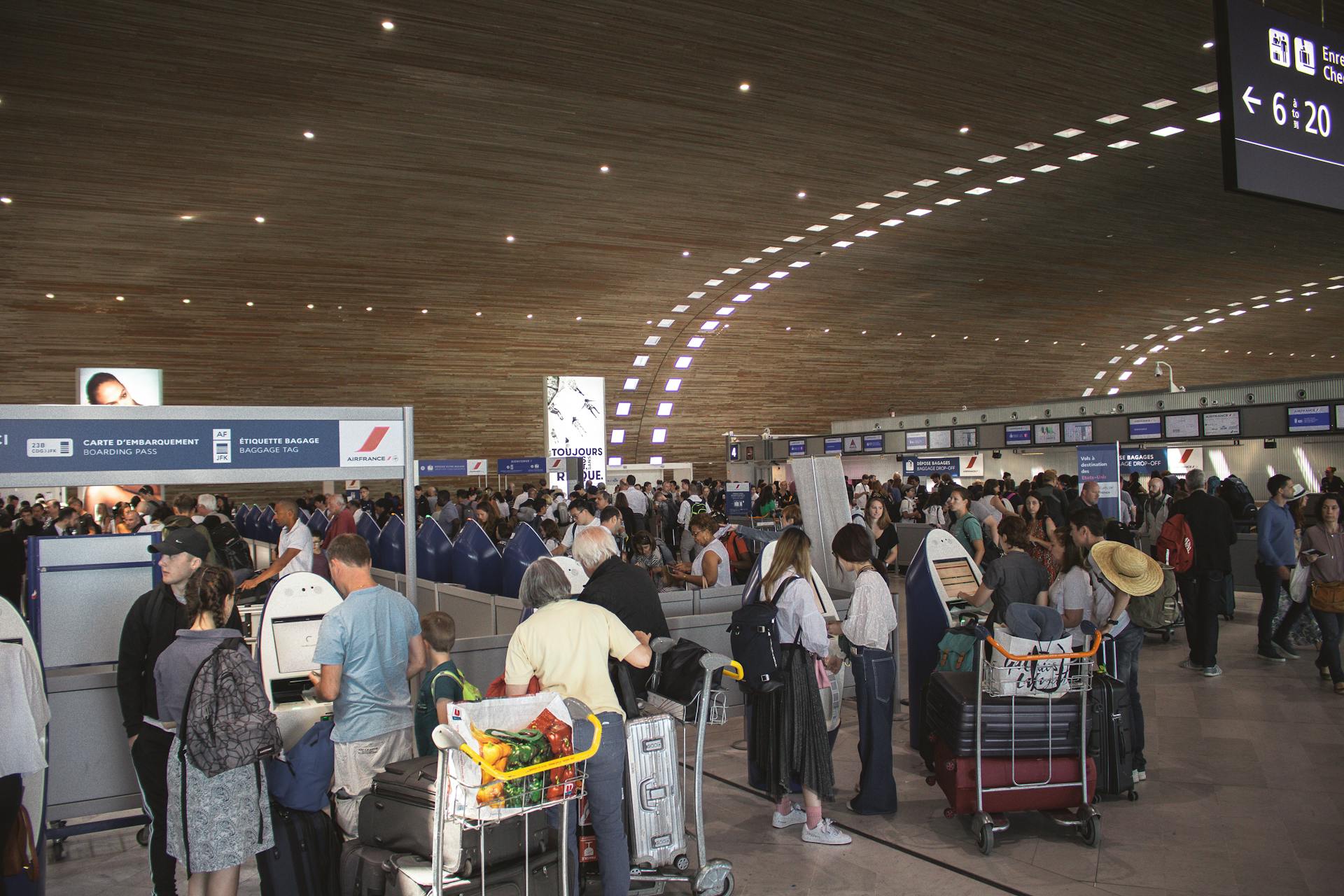
On May 14, 2026, 130 refugees stepped onto the tarmac at Rome's Fiumicino airport. They arrived not on a rescue vessel, not through a smuggler's network, not after days adrift in the central Mediterranean. They arrived on a commercial flight, with documents, with a destination, with people waiting for them. A group called "Youth for Peace" held signs. The Community of Sant'Egidio, the Federation of Evangelical Churches, and ARCI — the organizations that built this corridor — marked the arrival as they have marked hundreds before it: quietly, operationally, without the performative urgency that typically frames migration in European media.
This was the humanitarian corridors program, born in 2016 in the wake of Mediterranean shipwrecks that killed thousands and produced photographs that briefly horrified the continent before being absorbed into the news cycle. The model is deceptively simple: identify vulnerable refugees in countries of first asylum (Lebanon, Ethiopia, Niger, Libya's margins), process their documentation before departure, arrange legal entry, and connect them with integration networks upon arrival. In ten years, over 10,000 people have entered Europe through this mechanism. The drowning count for corridor arrivals: zero.
Brazil replicated the model. So did France and Belgium. The infrastructure exists. The evidence exists. The results exist.
The Reading
The humanitarian corridors program presents European migration politics with its most uncomfortable artifact: a working alternative. Not a theoretical alternative debated in policy papers, not an aspirational framework announced at summits, but an operational system with a decade of data showing that legal, organized, pre-screened migration produces better outcomes for refugees, host communities, and state budgets than the enforcement-and-deterrence model that dominates continental policy.
And this is precisely why the program remains marginal. It works, but it works at a scale that does not threaten the dominant narrative. Ten thousand people over ten years is a demonstration project, not a policy. Italy receives more unauthorized arrivals in a single month than this program has processed in a decade. The corridors exist in a political terrarium — visible enough to cite when Europe needs evidence of its humanitarian credentials, small enough to never challenge the architecture of deterrence that generates the political capital European leaders increasingly depend on.
The marginality is not accidental. Scaling humanitarian corridors would require acknowledging several things that the current European political consensus cannot absorb. First, that legal pathways reduce irregular migration — an empirical finding that undermines the logic of border militarization. Second, that integration works when it is structured and resourced — a finding that contradicts the "failed multiculturalism" narrative that has powered electoral victories from Rome to Stockholm. Third, that civil society organizations, not states, designed the most effective migration management tool on the continent — a finding that embarrasses governments that have spent billions on Frontex, externalization deals, and offshore processing fantasies.
The "Youth for Peace" welcome party at Fiumicino is not a footnote. It is the signal within the signal. The corridor model produces not just safe arrivals but civic infrastructure — networks of volunteers, language teachers, housing coordinators, employment counselors — that generate social cohesion rather than consuming it. Every arrival processed through the corridor is an arrival that does not become a political emergency, does not generate a tabloid headline, does not feed the cycle. The silence around the program's success is the loudest data point.
CORE Connection
The Fiumicino signal belongs to a category IN-KluSo tracks across FLOW: solutions that work but don't scale because scaling would disrupt the political economy that benefits from the problem. Humanitarian corridors prove that Europe can manage migration humanely and effectively. That proof is precisely the threat. A continent that has organized its migration politics around crisis — crisis at the border, crisis in reception centers, crisis in integration — cannot easily absorb evidence that the crisis is manufactured by policy choices, not by the movement of people.
The 130 who landed in Rome on May 14 are not a statistic. They are a counter-argument, walking through arrivals with documents in their hands, dismantling the premise that safe, legal, organized migration is utopian. It is operational. It is just not politically convenient to admit that.
Sources
- Comunita di Sant'Egidio, "Humanitarian Corridors: 10 Years Report," 2026 — https://www.santegidio.org
- UNHCR, "Complementary Pathways for Admission of Refugees to Third Countries," 2024 — https://www.unhcr.org
- Federation of Evangelical Churches in Italy (FCEI), "Corridoi Umanitari: A Model for Europe," 2025 — https://www.fcei.it
- ARCI, "Welcome and Integration: The Corridor Model," 2025 — https://www.arci.it
- European Commission, "Study on Legal Pathways to Protection in the EU," 2024 — https://ec.europa.eu