The Signal
The arithmetic is stark and almost poetic in its cruelty. Croatia lost approximately 400,000 residents in a decade — roughly 10% of its population — through the quiet, legal, unremarkable process of EU free movement. Young Croatians with nursing degrees, engineering credentials, and language skills walked through the open door to Germany, Ireland, Austria, and the Netherlands. They did not flee. They calculated. The salary differential made the decision for them.
Simultaneously, Croatia launched its digital nomad visa program, joining Estonia, Portugal, Greece, and a growing roster of countries courting a specific demographic: remote workers earning foreign salaries, typically from the United States, United Kingdom, or Western Europe, who seek lower cost of living, Mediterranean aesthetics, and favorable tax treatment. The visa requires proof of income above a threshold that most Croatian workers cannot meet in their own economy. The country is, in effect, designing immigration policy for people who earn more than its citizens.
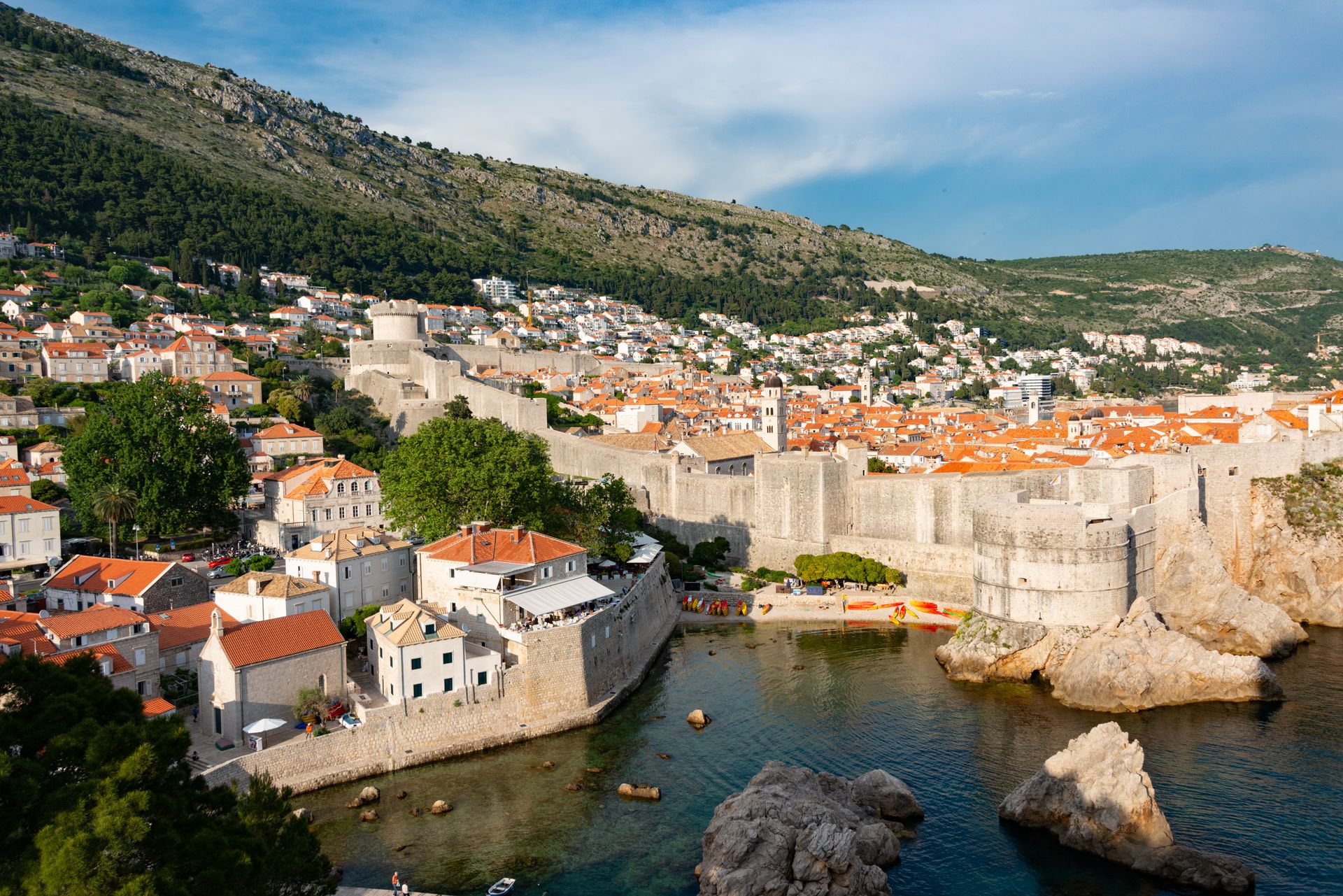
The result is a demographic substitution that no policy document names as such. Coastal cities like Split and Dubrovnik, already strained by mass tourism, now absorb a secondary layer of high-purchasing-power temporary residents who rent apartments year-round, frequent coworking spaces, and consume at price points that local salaries cannot sustain. Housing costs rise. Service economies recalibrate toward nomad budgets. The young Croatians who might have stayed find one more reason to leave.
The Reading
Croatia's predicament illuminates a paradox embedded in the European Union's asymmetric integration. Free movement of labor — the EU's signature achievement — functions as a centrifugal force for peripheral economies. It does not move workers; it moves the most mobile, educated, and ambitious workers, leaving behind demographic structures that cannot regenerate. Croatia's fertility rate hovers around 1.4. Its median age rises annually. The villages of Slavonia empty. The wards of regional hospitals go unstaffed. EU structural funds arrive to build roads in regions where the people who would drive on them have already left.
The digital nomad visa is not a solution to this demographic crisis. It is a parallel economy layered on top of it. Nomads do not integrate in the way that permanent immigrants do. They do not learn Croatian. They do not pay into the pension system that Croatia's aging population will soon overwhelm. They do not fill the nursing positions, teaching roles, or municipal services that the departed generation would have staffed. They bring consumption without contribution to the social contract, purchasing power without civic participation. They are, in the most clinical sense, economic tourists with residency permits.
This is not an argument against nomads as individuals. It is a structural observation about what happens when a country designs immigration policy to attract spending rather than settlement. Portugal learned this through its golden visa program, which inflated Lisbon's housing market to the point where the government was forced to suspend it. Greece is learning it now, as Athens rents outpace wages in real time. Estonia's e-residency program, the earliest iteration, at least had the elegance of being digital — it did not compete for physical housing stock.
Croatia's version combines the worst elements: a physical presence requirement that competes for housing, a salary threshold that prices locals out of their own neighborhoods, and a tax framework that under-captures the fiscal contribution that permanent residents provide. The nomad brings euros but does not build schools. The Croatian nurse who left for Munich sends remittances but does not deliver babies in Zadar. The country becomes a staging area — beautiful, functional, and progressively emptied of the people who made it both.
CORE Connection
The Croatia signal maps onto a pattern FLOW tracks across the European periphery and, increasingly, the Global South: the deployment of mobility policies that serve capital flows rather than demographic needs. The nomad visa is not a migration policy. It is a consumption policy dressed in migration language. It answers the question "how do we attract spending?" rather than "how do we build a society?" Croatia's 400,000 departed residents represent not just a demographic loss but an institutional one — teachers, nurses, engineers, municipal clerks, the human infrastructure of a functioning state. No number of remote-working software developers from San Francisco can replace that infrastructure, no matter how much they spend on coffee in Split.
The paradox will deepen. As more peripheral EU states adopt nomad visas, they compete with each other for the same limited pool of high-income remote workers, driving concessions (lower taxes, faster processing, fewer requirements) that further erode the fiscal base needed to serve the citizens who remain. It is a race to the bottom disguised as cosmopolitan innovation.
Sources
- Croatian Bureau of Statistics, Census 2021 vs. 2011 comparison — https://www.dzs.hr
- European Commission, "Free Movement of Workers: Annual Report on Labour Mobility," 2025 — https://ec.europa.eu
- Eurostat, Population Change Statistics for Croatia, 2014-2024 — https://ec.europa.eu/eurostat
- Croatia Digital Nomad Visa Program, Ministry of Interior official guidelines — https://mup.gov.hr
- Institute of Economics, Zagreb, "Emigration, Housing, and Demographic Sustainability," 2025 — https://www.eizg.hr