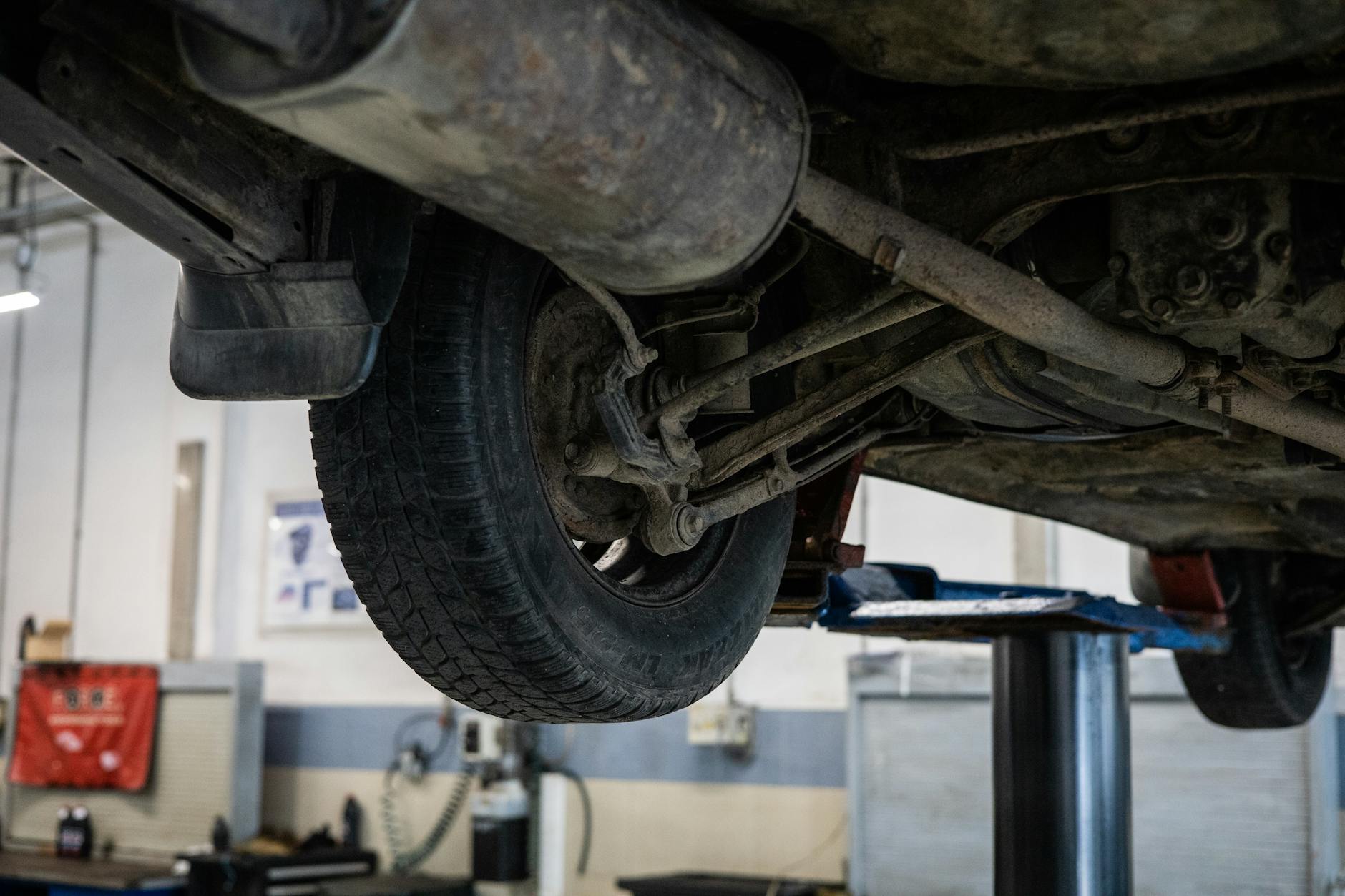
The verdict arrives in writing and fits in two words: total loss. The car sits in the appraisal yard with its paint nearly intact, all four doors sound, the dashboard lighting up like day one. It does not look like a dead car. And yet the paper says it no longer exists.
To understand how an almost-whole car is declared gone, rewind. There was a crash — not a tragedy: an ordinary collision, the kind the country's network of two hundred and six certified body shops across twenty-three cities exists to repair. In a gasoline car, that crash was bodywork: estimate, repair, paint, deliver. But this car is electric, and the impact touched the one part no collision shop opens: the battery pack.
That is where the arithmetic changes. The high-voltage battery is worth between thirty and fifty percent of the entire car. Modules, electric motors and power electronics are not immediately available in the national market: they must be imported, waited for, paid for. And when the repair bill exceeds seventy or eighty percent of the insured value, the insurer stops arguing about the crash and signs the verdict. The body is nearly intact. It does not matter.
The owner in this story also had something almost nobody has. In Colombia, only twelve of every hundred registered vehicles carry voluntary full-coverage insurance. The other eighty-eight would have received no verdict and no check: they would have paid for the battery out of pocket — half a car out of pocket — or walked away from it.
And the line behind him is growing: between January and April of this year, fourteen thousand five hundred and forty-one electric cars were registered in the country, three times as many as in the same period a year earlier. Each one rides on a part worth half the machine, that no corner shop will open, and that no traditional policy covers when it simply ages.
What follows is not the story of an accident. It is the arithmetic that decides, before any crash, who can afford to insure — and to crash — an electric car in Colombia.
Scene reconstructed from documented conduct and territory; sources at the end of the article.
The Signal
On the Bogotá–Medellín highway, kilometre 6.5, sits the centre where Colombia's insurance sector studies how cars break. From there comes the network that certifies collision workshops: 206 reached a rating in the 2024 edition, spread across 23 cities, with more than a thousand technicians trained and eight thousand hours of advisory accumulated.
Between January and April 2026 Colombia registered 14,541 electric cars, 207% more than the same period the year before.
What changed on the assessors' tables is not the impact. It is the part. The high-voltage battery represents between 30% and 50% of the vehicle's total value, and if the repair cost exceeds between 70% and 80% of the insured value, the car is declared a total loss. Minor bodywork is still bodywork. A hit that touches the pack turns an almost intact car into a car that does not exist.
The Context
Cesvi Colombia, led by general manager William Chaparro with Francisco Sánchez directing its workshop scheme, says it plainly: several elements such as battery modules, electric motors or power electronics are not immediately available on the national market. And traditional policies do not cover natural wear or the battery's progressive degradation, because insurance answers to sudden, unforeseen events, not to the passage of time.
One fact orders everything above, and it comes not from the repair trade but from the insurers: barely 12.2% of Colombia's more than 21 million registered vehicles carry voluntary insurance. Of that 12.2%, cars are 27% and motorcycles barely reach 3%. Insured risks hover around 2.4 million and the renewal rate does not pass 63%. Meanwhile, electric vehicles grew 141.2% in a year and hybrids 59.2%.
In other words: the electric car arrived in a country where almost nobody insures.
The Reading
The simple hypothesis is that every new car is expensive to repair at first, and that is true. The parts network always trails the sales network, and Geely has already opened its own workshops in Bogotá, Medellín, Cali and Pereira while BYD accumulates share. In time the parts arrive and the price falls. That always happens.
What time does not correct is the crossing of two thresholds. If a single part is worth half the car and only twelve in every hundred vehicles in the country carry comprehensive cover, then the total loss stops being the insurer's problem and becomes the owner's personal loss. The remaining 88% have nobody to hand the battery invoice to.
The interests at the table have to be named, because both sides are there. Cesvi belongs to the insurance and repair sector: it benefits from a story in which the electric car is expensive to fix and must go to certified workshops, which are its own. Facing it, the brands publish releases showing off service networks and parts availability from day one. Neither voice can hold up a reading alone. What is verifiable and independent of both is insurance penetration.
And there is a fact that does not exist, which is the most uncomfortable finding: there is no public figure for premiums or claims specific to electric vehicles in Colombia. The segment is too new and lacks a sufficient historical base on frequency and severity. Nobody knows what the risk costs. A car is being sold whose most expensive part nobody has learned to price, in a market where almost nobody insures it.
It is not a technology problem. It is a problem of who absorbs the cost when something happens. Cesvi held its first forum on electric and hybrid vehicles in 2019, with 180 attendees from nine insurers. Seven years later the volume arrived, and that forum's question is still open.
The Pattern
The scenario usually anticipated is that the electric car becomes expensive to insure before it becomes expensive to buy, and that the entry filter moves from the list price to the annual premium. In a country with 12.2% penetration, the likelier scenario is another: the risk is not insured, it is absorbed. The owner pays for the battery out of pocket, or abandons the car.
From there come three foreseeable movements between 2026 and 2030. Policies specific to electric vehicles with a separate deductible for the battery and an explicit exclusion for degradation. High-voltage certification as a new level required of the workshop network, because today collision is certified on a vehicle whose decisive part the workshop does not open. And a used market where the buyer will demand a battery-health report that nobody in Colombia issues today.
That report is the real missing part.