Human Becoming
The Woman Who Noticed the Cameras
She walks her dog every morning at 6:45 along the Rue de la République. Moirans is the kind of town where you know the baker by name, where the marché on Saturday mornings smells like roasting chicken and fresh goat cheese, where the Isère river valley opens up toward the Vercors massif and the light in autumn is so precise it looks painted. Eight thousand people. A medieval church. A rugby club. A boulangerie that has not changed its croissant recipe in forty years. The kind of place where surveillance feels like something that happens in other cities — in Lyon, in Paris, in places with metros and protests and reasons to watch.
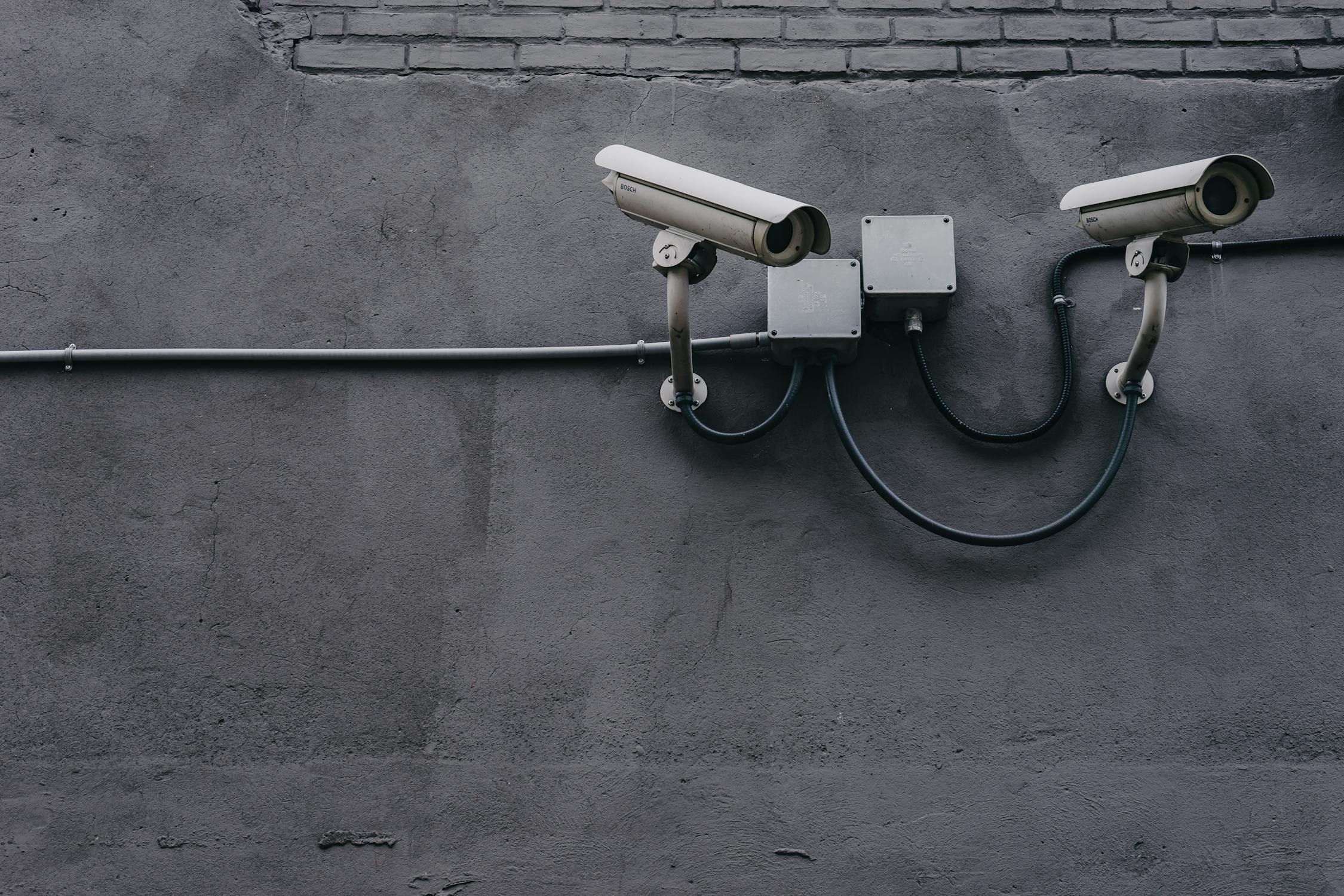
She noticed the cameras in 2022. Not all at once. First the one above the pharmacy, angled toward the intersection where schoolchildren cross in the morning. Then another near the parking lot by the salle des fêtes. Then a cluster of three on the Route de Voreppe, pointed at the entrance to town from the A48 autoroute. She is fifty-four years old. She works in municipal accounting for a neighboring commune. She understands procurement documents. When she requested the délibération from the conseil municipal authorizing the camera system, she found that the contract had been approved in a routine session with minimal discussion. The system was Briefcam — a software platform developed by an Israeli company, acquired by Canon in 2018, that layers algorithmic analysis on top of standard CCTV footage.[1]
She did not know what Briefcam was. She looked it up. She learned that it does not merely record. It classifies. It can search footage retroactively by physical attributes — clothing color, gender, estimated age, body type, direction of travel. It can track a specific individual across multiple cameras and reconstruct their path through a city. It can generate alerts based on “unusual behavior” — a category the software defines algorithmically without disclosing its parameters. She learned that this system was watching her walk her dog every morning and categorizing her body, her clothing, her route, her patterns.
She contacted La Quadrature du Net, the French digital rights organization that had been tracking Briefcam deployments across France. They told her Moirans was not unusual. It was typical. Briefcam had been deployed in approximately 200 French municipalities, most of them small and medium-sized towns where procurement oversight is thin and public awareness of algorithmic surveillance is close to zero.[2] The cameras were everywhere. The debate was nowhere.
Structural Read
The Quiet Proliferation
Briefcam’s business model is built on a specific insight: the infrastructure already exists. France has approximately one million CCTV cameras in public spaces, a number that grew 40% between 2012 and 2022.[3] Most of these cameras are passive recording devices — they capture footage that sits on hard drives and is reviewed, if at all, only after an incident. The footage is inert. Briefcam makes it active. By layering algorithmic video analytics on top of existing camera networks, the software transforms a passive recording infrastructure into an active surveillance system without requiring municipalities to install a single new camera. The marginal cost of converting a dumb camera into a smart one is a software license. The political cost, until recently, was zero.
The Moirans case is structurally significant because it produced a court ruling. In March 2026, the Tribunal Administratif de Grenoble ruled that the commune’s use of Briefcam was illegal on multiple grounds: the system processed personal data without adequate legal basis under the GDPR, the data protection impact assessment required by Article 35 of the GDPR had not been completed, the information provided to residents about the surveillance was insufficient under Article 13, and the system’s capacity for biometric-adjacent analysis — searching by physical characteristics — constituted a form of biometric processing that required explicit consent the commune had never sought.[4]
The court ordered the cameras deactivated. Not removed — deactivated. The hardware stays. The algorithmic layer must stop. The distinction is precise and revealing: the physical infrastructure of surveillance is legal. What is illegal is making it intelligent.
La Quadrature du Net had fought for this ruling for three years. The organization had filed complaints with the CNIL (Commission Nationale de l’Informatique et des Libertés, France’s data protection authority) as early as 2023, when investigative journalism by Disclose revealed that the French national police had been using Briefcam since 2015 without informing the CNIL or conducting legally required impact assessments.[5] The CNIL launched an investigation. The investigation is ongoing. In the interim, individual municipalities continued deploying Briefcam without central oversight, and it fell to a nonprofit with a staff of fewer than twenty people to challenge each deployment, commune by commune, tribunal by tribunal.
The Scale Problem
The Moirans ruling applies to Moirans. It does not automatically apply to the approximately 199 other French municipalities running Briefcam or comparable algorithmic video analytics. French administrative law does not operate on a binding precedent system in the common-law sense. Each municipality would need to be individually challenged. La Quadrature du Net does not have the resources to file 200 lawsuits. The legal victory is real. Its scalability is limited.
This structural asymmetry — between the ease of deploying surveillance and the difficulty of challenging it — is the core of the signal. A commune of 8,000 can install Briefcam in a single council meeting. Removing it requires three years of litigation, specialized legal expertise, investigative journalism, and the sustained attention of a digital rights organization. The deployment cost is a software license. The resistance cost is an institutional campaign. The asymmetry is not a bug. It is the business model.
Briefcam’s parent company, Canon, does not publish the number of active deployments globally. Industry estimates place the software in use across more than 30 countries.[6] In France alone, the approximately 200 municipalities using Briefcam represent a market that emerged almost entirely below the threshold of public debate. No national law authorized algorithmic surveillance in public spaces. No parliamentary vote approved the deployment of facial-recognition-adjacent technology in small towns. The technology was sold as a security upgrade — a software layer on existing cameras, positioned as an efficiency tool for police forces that lack the staff to review hours of footage manually. The framing was operational, not political. The politics arrived later, in the form of lawsuits.
The EU AI Act Horizon
The Moirans ruling arrives fifty-four days before a structural shift in European law. On August 2, 2026, the EU AI Act’s prohibition on real-time biometric identification in public spaces takes full effect.[7] The ban, codified in Article 5 of Regulation (EU) 2024/1689, prohibits AI systems that perform real-time remote biometric identification in publicly accessible spaces for law enforcement purposes, with narrow exceptions for specific serious crimes, missing persons, and imminent terrorist threats.
The question is whether Briefcam falls within the prohibition. The software does not perform facial recognition in the traditional sense — it does not match faces to identity databases. But it performs what privacy advocates call “soft biometric” identification: searching by physical characteristics (height, build, clothing, gender presentation, estimated age) that, in combination, can uniquely identify individuals without ever scanning a face. The EU AI Act’s definition of “biometric identification” is broad enough to capture this capability, but the implementing regulations that would clarify the boundary have not been finalized.[8]
This ambiguity is not accidental. It is the product of a regulatory process that moved faster than the technology it aimed to govern. The AI Act was drafted in 2021, when the primary concern was facial recognition. Briefcam represents a category of surveillance that operates in the gap between facial recognition and generic video analytics — too specific to be ignored, too different from facial recognition to be clearly captured by existing definitions. The Moirans court resolved this ambiguity at the local level by ruling that Briefcam’s capabilities constitute biometric processing under the GDPR. Whether the EU AI Act will codify that interpretation at the continental level remains to be seen.
Pattern Confirmation
The Democracy Deficit
The pattern that confirms this signal as structural is not the technology. It is the governance gap. In every documented case of Briefcam deployment in France, the same sequence repeats: a municipal government procures the software through standard purchasing channels, the procurement is approved in a routine council session, no public consultation is held, no data protection impact assessment is completed, and the system operates for months or years before anyone outside the municipal administration becomes aware of its existence.[9]
This is not a failure of democracy. It is a feature of how municipal governance operates. Small-town councils in France meet regularly and approve dozens of procurement decisions per session. A software license for video analytics does not trigger the same political attention as a new housing development or a road project. The surveillance arrives as an administrative line item. It departs, if it departs at all, as a constitutional crisis.
The structural lesson from Moirans is that the threshold for deploying algorithmic surveillance is now below the threshold of democratic visibility. A town of 8,000 people can acquire the same analytical capability that intelligence agencies possessed a decade ago, deploy it without public knowledge, and operate it without legal oversight — not because the law permits it, but because the law has not yet caught up to the possibility that it would need to prohibit it at this scale.
Alternative Explanations
It is possible that the Moirans case is exceptional rather than typical — that most municipalities deploying Briefcam have conducted proper impact assessments and operate within legal bounds. This explanation is undermined by La Quadrature du Net’s systematic documentation, which found compliance failures in every deployment they investigated. The evidence suggests systemic non-compliance, not isolated failure.
A second reading holds that the EU AI Act will resolve the governance gap when it takes full effect in August 2026. This is plausible but uncertain. The Act’s biometric prohibition applies to real-time identification for law enforcement. Briefcam’s retrospective search capabilities — analyzing stored footage rather than live feeds — may fall outside the real-time prohibition, creating a regulatory gap for post-hoc algorithmic surveillance.
What is not known: The exact number of French municipalities currently operating Briefcam or equivalent systems. The ~200 figure comes from La Quadrature du Net’s estimates, not from official government data. No central registry of algorithmic surveillance deployments exists in France.
What would change the signal: If the CNIL issues a national directive prohibiting Briefcam-style analytics without individual DPIA compliance, the commune-by-commune litigation model becomes unnecessary. If the EU AI Act implementing regulations explicitly include retrospective biometric search in the prohibition, the legal ambiguity resolves. If Briefcam modifies its software to remove biometric-adjacent capabilities, the privacy argument narrows.
Monitoring indicators: Track CNIL investigation outcomes for the French national police Briefcam deployment. Monitor EU AI Act implementing regulations for definitions of biometric identification. Track La Quadrature du Net litigation pipeline for new municipal challenges. Monitor Briefcam/Canon product updates for capability modifications in the European market.
[1] Briefcam (Canon Group), product documentation and deployment specifications, 2024. briefcam.com — Tier B
[2] La Quadrature du Net, “Surveillance algorithmique en France: cartographie des déploiements municipaux,” 2024–2026. laquadrature.net — Tier A
[3] CNIL, “Les caméras dans les espaces publics: état des lieux,” 2023. cnil.fr — Tier A
[4] Tribunal Administratif de Grenoble, ruling on Moirans Briefcam deployment, March 2026. — Tier A (primary legal source)
[5] Disclose, “La police nationale utilise Briefcam depuis 2015,” investigative report, November 2023. disclose.ngo — Tier B
[6] Industry analysis, Briefcam global deployment estimates, multiple sources 2024–2025. — Tier C
[7] European Parliament and Council, Regulation (EU) 2024/1689 (AI Act), Article 5, biometric identification prohibition. eur-lex.europa.eu — Tier A
[8] European Commission, AI Act implementing regulations (draft), biometric identification definitions, 2025–2026. — Tier C
[9] La Quadrature du Net, municipal procurement analysis across documented Briefcam deployments, 2023–2026. laquadrature.net — Tier B
The sources this piece already cited, gathered and checked. Open to verify.
- Briefcam (Canon Group), product documentation and deployment specifications, 2024
- La Quadrature du Net, municipal procurement analysis across documented Briefcam deployments, 2023–2026
- CNIL, “Les caméras dans les espaces publics: état des lieux,” 2023
- Disclose, “La police nationale utilise Briefcam depuis 2015,” investigative report, November 2023
- European Parliament and Council, Regulation (EU) 2024/1689 (AI Act), Article 5, biometric identification prohibition