The Signal
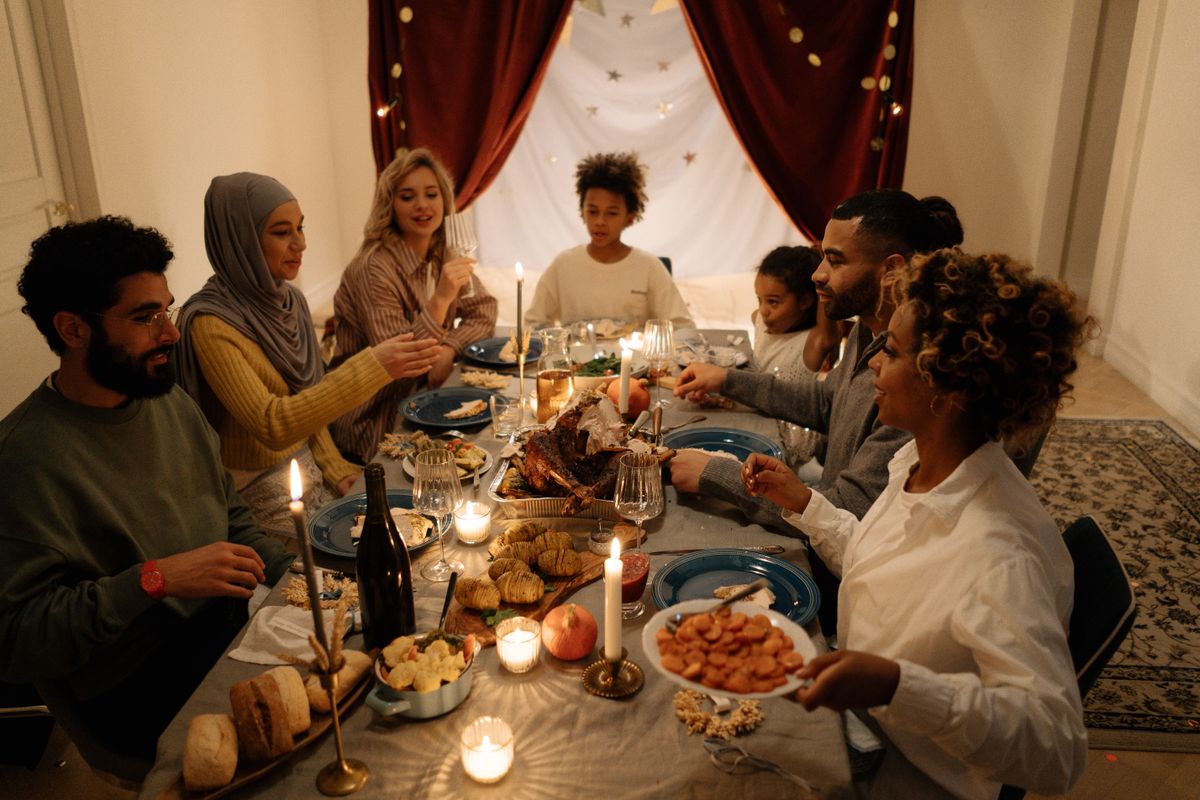
The fight starts before the rice is served. In a house in Westwood, the neighborhood Angelenos call Tehrangeles for the density of its Iranian diaspora, a sixty-three-year-old father who left Tehran in 1983 puts his phone face-down on the table. His twenty-eight-year-old daughter does not. She has been scrolling through casualty reports from Bandar Abbas since the ceasefire was declared fifty-six days ago, and she has opinions about what a ceasefire means when the satellite images still show smoke. The father supports the strikes. The daughter does not. They have had this argument seven times in three weeks. The rice gets cold. Nobody wins.
This scene — or a version of it, scaled across 1.5 million Iranian Americans in living rooms from Los Angeles to Great Neck to Northern Virginia — is the human surface of a data point released in March 2026 by the Public Affairs Alliance of Iranian Americans. PAAIA's survey found that Iranian Americans between eighteen and thirty-four are significantly less likely to support military strikes against Iran than those over fifty-five. The gap is not marginal. It is generational, shaped by different relationships to the homeland, different information ecosystems, and fundamentally different theories about what American power does when it reaches the Middle East.
The Context
The Iranian-American community is unique among U.S. diaspora populations in the specificity of its founding trauma. The vast majority of older Iranian Americans trace their departure to the 1979 revolution and the hostage crisis that followed — events that created not just refugees but a community defined by opposition to the Islamic Republic as an existential project. For this generation, the regime in Tehran is not a government. It is the force that stole their country, their property, their identities. Military action against it is not aggression. It is correction.
Their children and grandchildren grew up in a different country and a different information environment. They watched the Iraq War unfold in real time. They absorbed the lessons of Libya, Syria, Afghanistan — a catalog of American military interventions that began with regime change rhetoric and ended in sustained chaos. They encountered the Iranian opposition not through memory of the Shah or the revolution but through the Woman, Life, Freedom movement of 2022, which was indigenous, feminist, and explicitly skeptical of both the regime and foreign intervention. For this cohort, opposing strikes is not pro-regime. It is anti-war, informed by two decades of evidence about what American military operations produce in the region.
The ceasefire — now on day fifty-six — has not resolved the divide. It has deepened it. Older community members view the pause as unfinished business, a hesitation that allows the regime to rebuild. Younger members view it as the only thing preventing the catastrophe they spent their early adulthood watching unfold in other countries. The dinner table is where these two frameworks collide, mediated by phones that deliver different realities to different generations sitting three feet apart.
The Analysis
The PAAIA survey captures an Iranian-American phenomenon, but the structure it reveals is universal to every diaspora community living through geopolitical conflict. The generational divide over war and homeland follows identical fault lines across at least four other major American diaspora populations.
Among Ukrainian Americans, the intergenerational split is inverted but structurally identical. Older community members, particularly those with Soviet-era memories, tend toward pragmatism and negotiation — they remember how power works and have low expectations of Western follow-through. Younger Ukrainian Americans, radicalized by the full-scale invasion of 2022, are maximalist: no territorial concessions, no ceasefire without complete withdrawal. A 2025 survey by the Ukrainian Congress Committee of America found that respondents under thirty-five were twice as likely to oppose any negotiated settlement as those over sixty.
In the Cuban-American community in Miami, the pattern has reversed over twenty years. The generation that arrived after 1959 maintained a monolithic anti-Castro politics that defined South Florida electorally for decades. Their grandchildren, born in the U.S. and shaped by social media connections to Cubans on the island, increasingly favor engagement over embargo. A 2024 Florida International University poll found that Cuban Americans under forty supported diplomatic normalization at rates 30 percentage points higher than those over sixty-five.
Among Chinese Americans, the divide centers on Taiwan and the question of confrontation with Beijing. Older immigrants from Taiwan maintain fierce pro-independence positions forged during martial law and democratization. Mainland-origin families carry different allegiances. Their American-born children, consuming both Mandarin and English-language media, occupy a third space where neither framework fully applies. The tension surfaced visibly during the 2024 Taiwan Strait crisis, when Chinese-American community organizations in the Bay Area fractured along generational and origin lines that had been papered over for decades.
What connects all of these is not ideology but information architecture. The generational divide is not simply about experience versus youth. It is about ecosystem. The father in Westwood gets his Iran news from Persian-language satellite television — Manoto, Iran International — outlets funded by opposition figures and structured around regime-change narratives. His daughter gets hers from Instagram accounts run by journalists inside Iran, from TikTok videos shot in Tehran, from Twitter threads by diaspora scholars who complicate the binary. They are not disagreeing about facts. They are living in different informational realities, and the dinner table is the only physical space where those realities are forced to coexist.
The PAAIA data shows that 67 percent of Iranian Americans under thirty-four get their primary news about Iran from social media platforms, compared to 23 percent of those over fifty-five, who rely predominantly on television and established diaspora media. This is not a preference gap. It is a structural divergence in how reality is constructed, and it maps almost exactly onto the attitudinal divide on military intervention.
The Anticipation
The ceasefire will end or it will hold, and either outcome will deepen the generational rift. If strikes resume, younger Iranian Americans will mobilize in opposition — not as pro-regime actors, but as anti-war organizers drawing on the same networks and tactics that powered campus movements in 2024 and 2025. If the ceasefire holds, older community members will interpret the pause as betrayal, and the bitterness will calcify into a political identity that moves further from their children's.
The broader signal is that diaspora communities in the United States are no longer political blocs. They are intergenerational battlefields where the weapons are algorithms and the casualties are family dinners. The Cuban-American shift took thirty years. The Ukrainian-American split took three. The Iranian-American divide is happening in real time, observable in survey data that barely captures the texture of what it means to love the same country from opposite sides of an information divide. Every diaspora family with a phone and a conflict is having this fight. The rice is always cold by the end.
CORE Connection
This is a CORE signal about the fragmentation of collective memory. Diaspora communities were once unified by shared trauma — the revolution, the invasion, the exile. That unity depended on a shared narrative, transmitted through family, community media, and the physical proximity of people who had lived through the same events. The algorithm has broken that transmission. Each generation now constructs its own version of the homeland from different sources, different platforms, different epistemologies. The dinner table — the last analog space where these constructions meet — is where the fracture becomes audible. The signal is not that families disagree about war. It is that they no longer share the informational substrate required to disagree productively.
Verified Sources
- Middle East Eye — https://www.middleeasteye.net — PAAIA survey findings on Iranian-American generational attitudes toward military strikes
- Al Jazeera — https://www.aljazeera.com — Ceasefire coverage, day 56 context, Iranian-American community divisions
- PAAIA (Public Affairs Alliance of Iranian Americans) — https://paaia.org — March 2026 survey data, media consumption demographics
- Florida International University Cuba Poll — https://cri.fiu.edu — Cuban-American generational attitude shifts on diplomatic normalization