
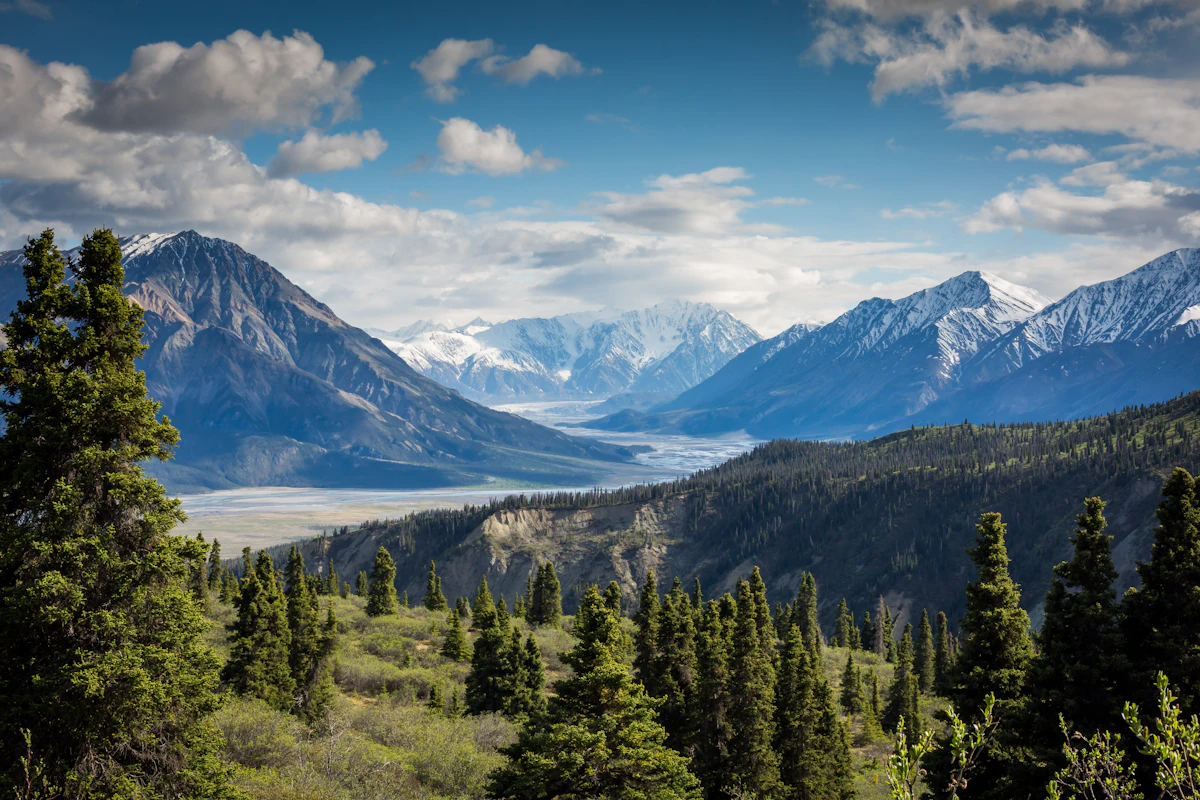
Photo by Jonatan Pie / Unsplash
Bozeman became a Zoom Town. The people who built it can't live there anymore.
The letter arrived in June. Not a pink slip — a rent renewal. Willow Bennett, payroll administrator, $62,000 a year, whose family homesteaded the Gallatin Valley before anyone in Silicon Valley had heard of Montana: her landlord wanted $2,400 a month. She'd been paying $1,750. The raise was $650. The explanation was none.
She searched Belgrade. She searched Bozeman. She searched Livingston, an hour east on I-90 where the wind comes sideways off the Absarokas and the coffee shop still closes at two. Nothing worked. Nothing was close. By early summer she was driving a U-Haul south toward Amarillo, Texas, watching the peaks disappear in the rearview mirror. "Some long-standing roots have been yanked out of the ground," she said afterward. "I wish I could take Montana with me and put it somewhere more affordable."
Across town, a man named Archie Martinez wakes up each morning in the HRDC Warming Center — a converted roller rink on the edge of downtown Bozeman that shelters more than a hundred people on any given night. He is a painter. He takes the bus eight miles to Belgrade most mornings, where he spends his day applying finish work to the kind of log mansions that overlook the Gallatin River. Massive timbers. Vaulted ceilings. Guest suites the size of Belgrade apartments. He builds wealth into structures he will never enter through the front door. Then he rides back to the shelter.
In Big Sky — forty-five miles south, up the canyon — a housekeeper named Nonadawn Larsen commutes sixty miles round-trip from Livingston every day to clean the vacation homes of people who drove up from Jackson Hole or flew in from Denver for the weekend. Mountain Maids of Montana, the cleaning company that employs her, pays about $25 an hour — good money by Montana standards. None of its twenty year-round employees can afford to live within commuting distance without a multi-hour drive. The company runs a daily shuttle just to get workers to the houses.
These are not edge cases. They are the texture of Bozeman in 2025: a place where the mountains are still there, where the sky still breaks your heart on a clear morning, and where the people who fix the pipes and staff the ER and clean the vacation homes are sleeping in shelters, commuting from Livingston, or — if they were lucky enough to see it coming — moving to Texas.
What happened to Bozeman is not mysterious. It is a mechanism with identifiable steps, documented actors, and a clear sequence of causation. The National League of Cities labeled Bozeman a "Zoom Town" in 2022 — one of a class of mid-sized western markets that became destination choices for remote workers once pandemic-era policy decoupled high incomes from high-cost metros. The label is accurate as far as it goes. It does not go far enough.
The core dynamic is capital arbitrage. Between 2020 and 2022, high-earning remote workers — primarily from California, Seattle, and Denver — arrived in Gallatin County with equity from prior home sales in pricier markets. The Bureau of Business and Economic Research at the University of Montana documented the result: net in-migration to Gallatin County surged to approximately 2,900 people in 2021 alone, nearly double the prior-decade average for a single year.[1] A significant portion of these buyers did not need mortgages. In 2022, 31% of all single-family home sales in Gallatin County were cash transactions — a figure the BBER noted was "consistent with what might occur should those new arrivals have sold real estate in other, even pricier markets elsewhere."[1]
Cash buyers operating above list price do not just win individual transactions — they reset the comparable sales data used to appraise every subsequent home in the market. Once enough cash-premium sales are recorded, lenders update their appraisals upward, dragging the entire price distribution with them. This is not price discovery. It is price importation.
The ownership price shock propagated immediately into rentals. As the cost of buying moved out of reach for local earners, demand pressure transferred to the rental market — compressing vacancy to approximately 3.6% in 2021, well below the 5–8% threshold considered healthy for a functioning market.[1] Landlords operating in a 3.6% vacancy environment face zero market discipline. Raise rent. The unit will fill. Willow Bennett's landlord did not do anything unusual. He read the market correctly.
By mid-2022, Bozeman median rents peaked above $2,200 per month.[1] The Gallatin Association of REALTORS® submitted data to the Montana State Legislature confirming that a median-earning Gallatin County household could afford approximately 40% of the mortgage payment required to buy a median-priced home.[2] Translation: the gap between local wages and local housing costs had become structurally unbridgeable for the bottom three income quartiles.
Employer-provided housing is not a workforce benefit. It is a market failure signal. When Bozeman Health — the region's largest employer, with over 2,000 staff — announced plans for 100 subsidized housing units near Belgrade airport in December 2021, it was not offering a perk. It was acknowledging that the regional housing market had ceased to function as a mechanism for retaining workers. The hospital had 500 open positions at the time of the announcement. Edie Willey, the hospital's Chief People Officer, described employees "staying overnight in a car" and new hires quitting within one to two weeks because they could not find a place to live.[4]
The entry friction analysis is straightforward: participation in Bozeman's economy requires either a remote income large enough to absorb $2,200+ rents, an employer willing to subsidize housing directly, a willingness to commute 60–120 miles round-trip daily from cheaper towns, or none of the above — in which case you are Archie Martinez or Willow Bennett. The spatial exclusion is not incidental to the Zoom Town phenomenon. It is its operating logic.
Brian Guyer, housing director at the Human Resource Development Council — Bozeman's primary social services organization — put it plainly: "HRDC picks up the tab for companies who are not paying their employees living wages."[3] His institution's own shelter capacity illustrates the cumulative damage: the HRDC Warming Center housed 197 people in 2019. By 2022 it was housing 409. By 2024, Bozeman's unhoused population had risen 280% from its 2018 baseline.[5] In December 2024, following a U.S. Supreme Court ruling in Grants Pass v. Johnson that cleared municipalities to ban outdoor sleeping, the Bozeman City Commission enacted a ban on sleeping on public property carrying fines up to $500 or jail time. The shelter over capacity; criminalize the overflow.
"In a very perverse way, this is what the service industry workforce housing looks like."
— Brian Guyer, HRDC Housing Director, referring to shelter residents who came directly from construction shifts at the Yellowstone Club (Source: High Country News, May 2025)
The Bozeman market differs from earlier mountain town price spirals — Aspen in the 1990s, Telluride in the 2000s — in one critical dimension: speed. Those markets shifted over decades, allowing some adaptive response. Bozeman's median home price increased from $359,500 in 2016 to $767,500–$800,000 by 2022.[2] That is a 114% increase in six years. The policy and institutional infrastructure of a mid-sized Montana college town does not adapt at that pace. The shelter, the healthcare system, the affordable housing pipeline, the zoning codes — none of them were built for this velocity.
Bozeman is not alone in this pattern — but it may be its most concentrated expression in the American West. The Zoom Town classification captures a real phenomenon: post-2020, remote work decoupled income from geography for an estimated 15–30% of the knowledge-worker labor force, releasing pent-up locational demand for amenity-rich, lower-density markets. Economists Arpit Gupta, Stijn Van Nieuwerburgh, and Constantine Yannelis documented significant price appreciation in outdoor recreation markets in their 2022 Federal Reserve working paper on the pandemic's spatial footprint — distinguishing between transient COVID flight and structural relocation driven by permanent remote work arrangements.
Montana's trajectory confirms the structural reading. Statewide, the HUD Point-in-Time Count data cited in High Country News shows Montana homelessness increased 89% between 2007 and 2023 — a period that includes both the 2008 financial crisis and the post-2020 Zoom Town surge.[5] Montana recorded the nation's largest increase in chronic homelessness in 2023, according to Montana Free Press analysis of HUD data.[6] The state's affordability collapse is not Bozeman-specific; it is Bozeman-led, with cascade effects into adjacent markets including Livingston, Belgrade, and the Madison Valley corridor.
The mechanism is not simply demand shock — it is demand shock layered onto a structurally thin supply base. Montana's land-use patterns, water rights complexity, construction labor scarcity, and slow permitting infrastructure mean housing supply cannot respond at market velocity even when demand signals are clear. The BBER 2023 report documented Gallatin County payroll employment growing 31% between 2015 and 2022 — approximately 16,000 new jobs — while housing permits consistently lagged by multiples.[1] You cannot build your way out of a Zoom Town in eighteen months.
Montana State University adds a compounding structural pressure that distinguishes Bozeman from comparable markets like Whitefish or Livingston. Enrollment grew from 16,841 students in Fall 2021 to a record 17,165 in Fall 2025, with approximately 4,801 students living in Bozeman proper but off-campus.[7] Students competing for the same rental units as service-sector workers — in a 3.6% vacancy market — is not a neutral demographic fact. It is additional demand pressure from a population with institutional housing subsidies (family support, financial aid) that service workers do not have.
Big Sky Research in 2022 found that 40% of 566 Big Sky workforce respondents had been forced to move out of their homes in the prior three years due to unaffordable rent, landlord sale, or short-term rental conversion.[3] In Madison County — the county containing Big Sky — there are 2,575 more jobs than resident workers, a gap that has grown 50% since 2010. These are not people choosing to commute. They are workers who were removed from the territory that their labor sustains.
The broader implication is precise: when capital mobility outruns territorial supply capacity in amenity markets, the resulting displacement is not a byproduct of growth — it is a structural transfer of spatial claim from wage-dependent residents to income-portable arrivals, and the social infrastructure designed to absorb that loss is not built to operate at the scale the market creates.
Bozeman was not an affordable market before 2020. Its proximity to Yellowstone National Park, Big Sky Resort, and MSU created sustained demand pressure throughout the 2010s. Median home prices had already climbed from approximately $250,000 in 2012 to $359,500 by 2016 — a meaningful appreciation curve before the first Zoom worker arrived. This alternative suggests the post-2020 spike was an acceleration of a pre-existing trend rather than a structural break, and that the displacement of service workers was already in process. The validity of this reading is genuine: Bozeman's housing stress predates the pandemic. However, the BBER data shows that the pace of appreciation from 2020 to 2022 — 76% in three years, accompanied by a doubling of cash-purchase share and a near-doubling of net in-migration — represents a categorical shift in market dynamics, not a continuation of the existing slope. The shelter population doubling between 2019 and 2022 supports a threshold effect, not a gradual trend extension.
A credible structural alternative locates the primary cause in Bozeman's restricted housing supply rather than in demand from out-of-state arrivals. Restrictive zoning, slow permitting timelines, limited developable land near the urban core, and construction cost inflation constrain the housing stock available to absorb any demand increase — local or imported. Under this reading, the Zoom Town influx would have mattered far less had Bozeman had a functioning affordable housing pipeline. This alternative has real merit and partial confirmation: the BBER data does show that housing permits lagged employment growth throughout the 2015–2022 period. The Bozeman City Commission has acknowledged the supply constraint in multiple housing action plans. However, the supply-failure frame cannot explain the speed or the cash-purchase share. Even a fully permissive zoning regime cannot produce housing faster than the market absorbed it in 2021–2022. The cash buyer dynamic — importing equity from pricier markets to outbid local earners at every price point — creates price-floor effects that supply additions cannot immediately correct. Both mechanisms are active; the demand shock is the primary triggering event against a background of chronic supply insufficiency.
What is not known: The direct voice of remote-worker arrivals is absent from the primary research. Their locational decision-making, their awareness of displacement effects, and their engagement (or non-engagement) with local community structures are not documented in available sources. This matters because cultural identity tension — one of the signal's stated dimensions — requires documentation from both sides of the demographic divide.
MSU housing policy gap: Montana State's role as a structural compounding pressure is identified but not deeply researched. The university's own housing development plans, its off-campus enrollment trends by year, and its policy positions on student housing in relation to service-worker affordability are not sourced. A longitudinal analysis of how MSU dormitory capacity decisions interact with local rental vacancy rates would materially strengthen this signal.
Market stabilization signals: The primary research documents the 2020–2022 spike and its immediate aftermath. Whether Bozeman's median home price has stabilized, corrected, or continued climbing post-2023 is noted in one Tier C source (median price $796,500 in July 2025, up 8.1%/year 2020–2024) but not confirmed through Tier A/B channels as of this report. Confirmation or denial of ongoing appreciation would significantly affect the signal's urgency tier.
Monitoring that would confirm or shift this signal: Annual HRDC shelter census data; Gallatin County building permit issuance versus demand growth; MSU off-campus enrollment tracking; proportion of new Bozeman rentals listed on short-term platforms versus long-term lease; remote-worker residency retention rates (are 2021 arrivals staying?); and any Bozeman City Commission action on mandatory affordable housing set-asides in new development.
[1] Bureau of Business and Economic Research, University of Montana. 2023 Gallatin Valley Housing Report. Submitted to the Montana State Legislature. bber.umt.edu — Tier A
[2] Montana State Legislature, Local Government Interim Committee. 2023 Market Update — Bozeman; GAR Housing Report. January 24, 2024. archive.legmt.gov — Tier A
[3] Montana Free Press / In These Times (Leonard C. Goodman Institute for Investigative Reporting). "How an Avalanche of Wealth Is Displacing Workers in Montana." April 17, 2023. montanafreepress.org — Tier B
[4] KBZK / MTN News Bozeman. "Bozeman Health responds to housing crisis with units for employees." December 9, 2021. kbzk.com — Tier B
[5] High Country News. "The Toll of Bozeman's Housing Crisis." May 2025. hcn.org — Tier B
[6] Montana Free Press. "Bozeman's Boom Depends on Immigrants, but Struggles to Support Them." May 7, 2024. montanafreepress.org — Tier B
[7] Montana State University, Office of the Registrar. "Montana State Enrolls Record 17,165 Students, Sets Records for Graduation Rates and Student Retention." Fall 2025. montana.edu — Tier A